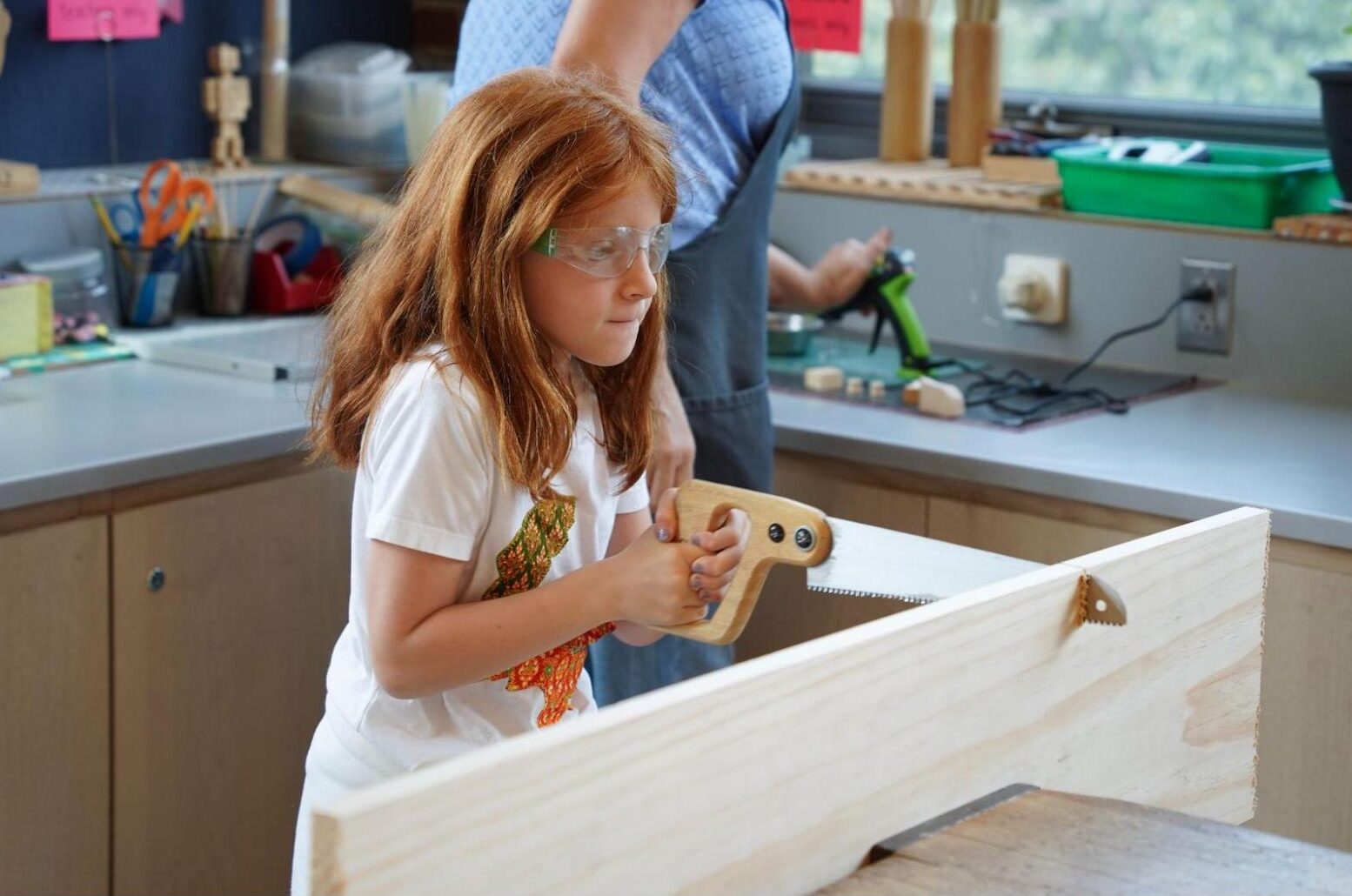
A Fieldston Lower 2nd Grader saws away at a long piece of wood in the Woodshop classroom, delighted and determined about the task in front of him. As a precise square falls away from the original plank, he says, “I got much faster!” Within seconds of recognizing his own growth from last year, he’s pulled into conversation with a classmate about a project outline, trading ideas about what to create next.
This atmosphere of measuring against oneself, making creative choices, and engaging in dialogue with others is a common sight in Gezime Baliaj’s Woodshop classes for Kindergarten through 3rd Grade. Students return to the same classroom every year, but the work and the independence expected of them change with each grade.
Kindergarten students first enter the class with the year-long goal of understanding the room’s tools and how to use them safely. Throughout the year, their crafts stay small, starting with wooden vehicles that help them explore movement before later shaping penguins and butterflies that connect to their classroom curriculum. At this stage, the classroom is a place to become comfortable with the materials and tools, and with the process of making new things.
By the time students return in 1st Grade, they’ve developed confidence and are ready to experiment with hammering and nailing. They also begin to recognize their own progress and skill development. Whether it’s sawing wood faster or steadying a hand while measuring, each class period offers an opportunity to build on what a student has already learned.
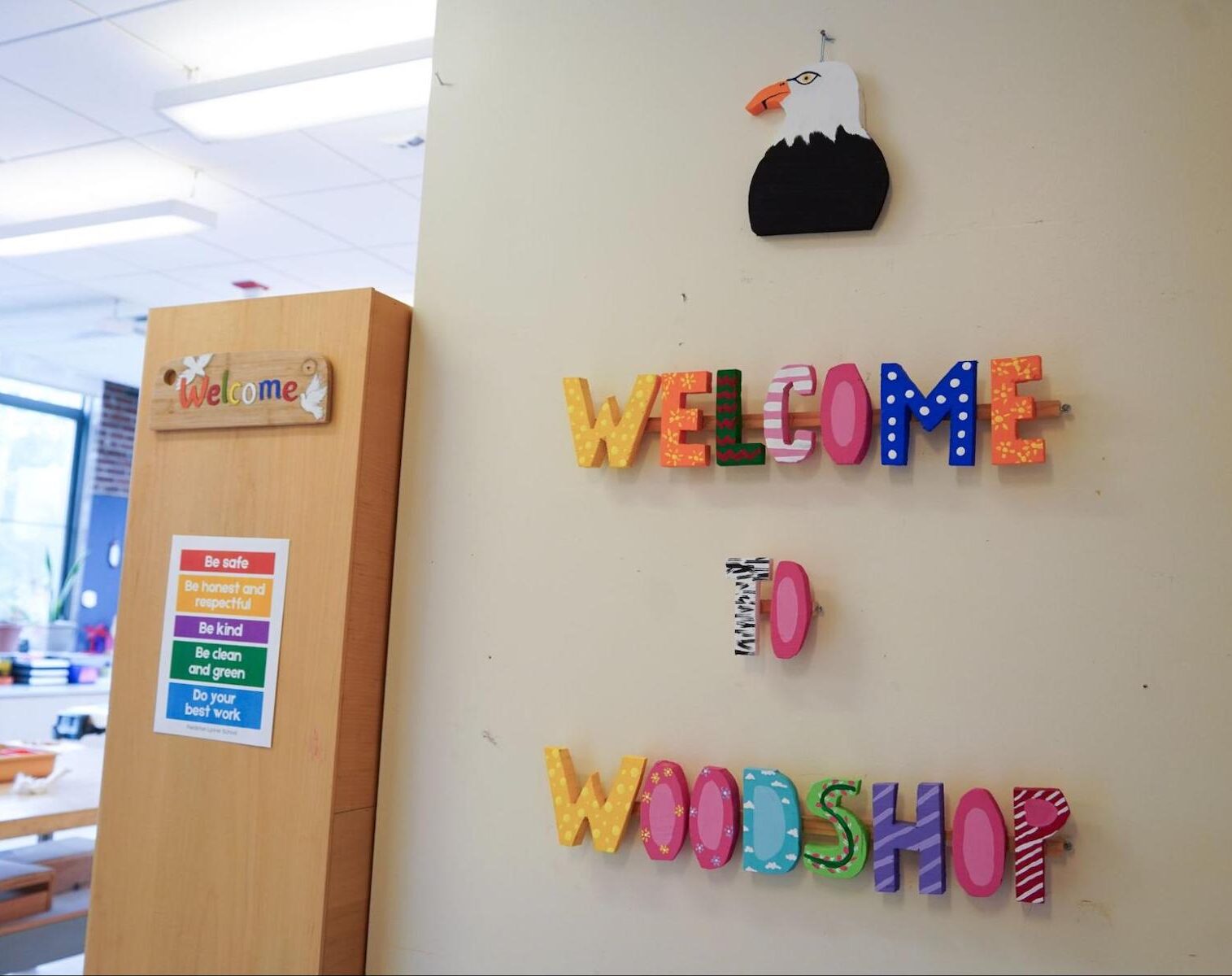
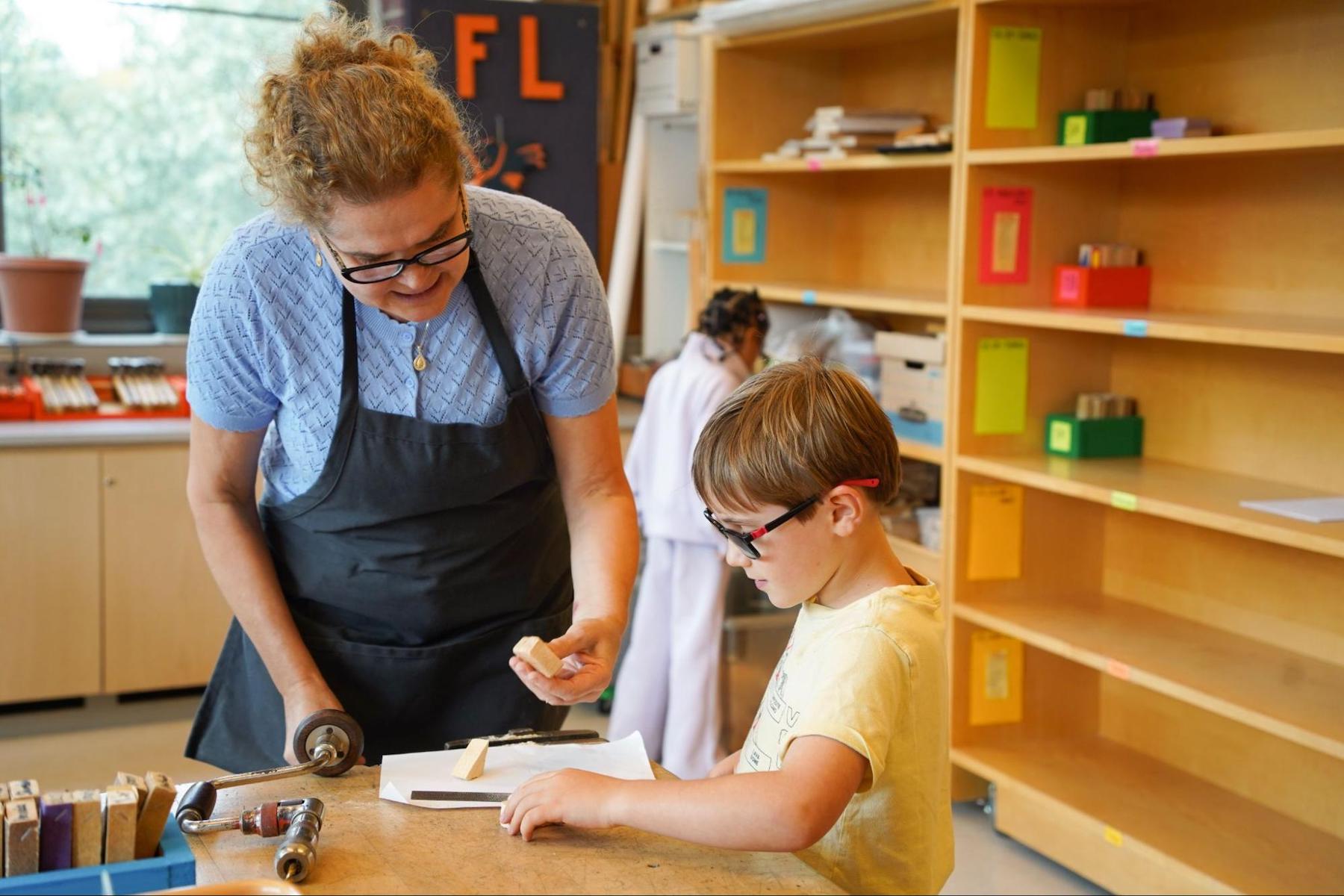
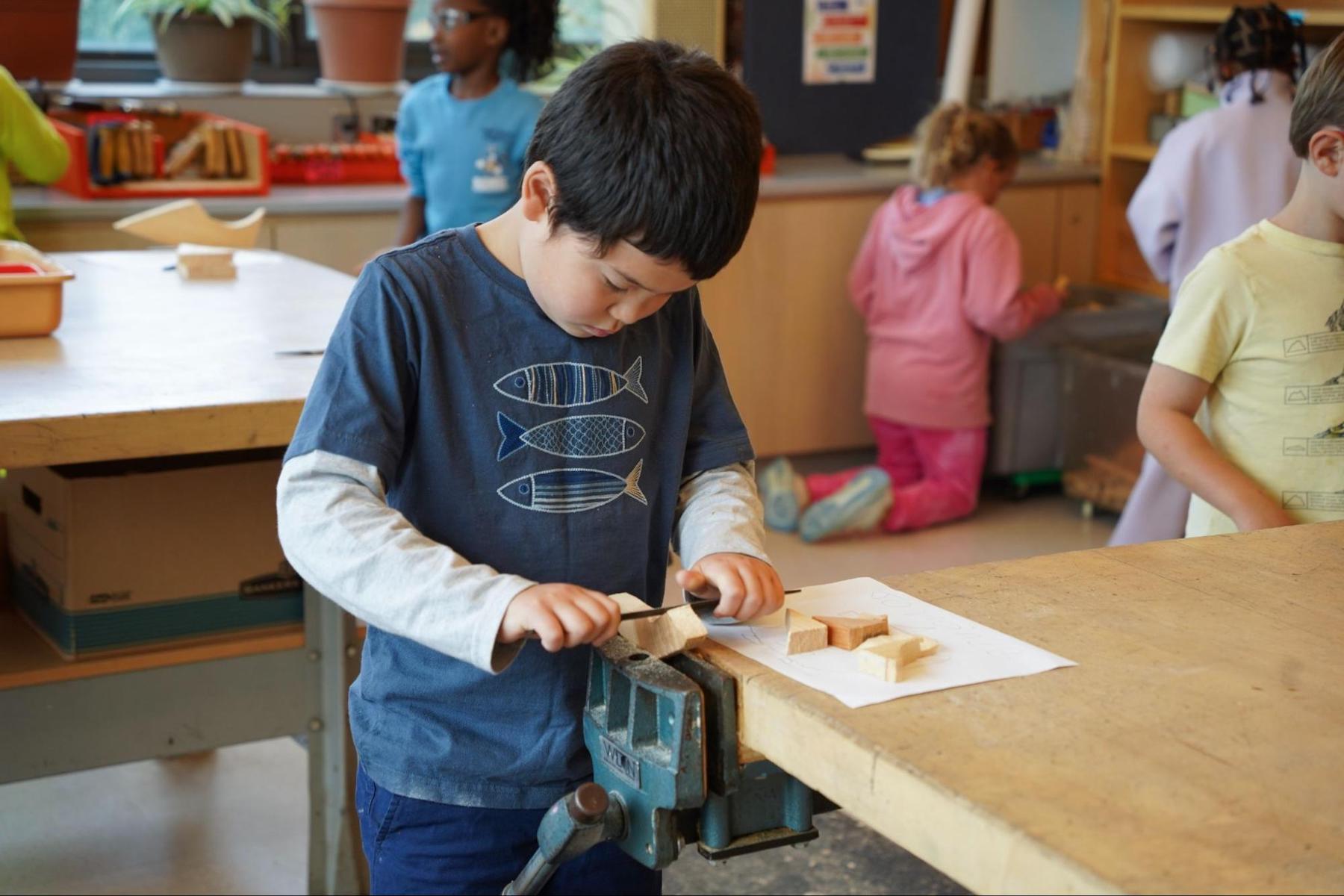
By the time students reach their final year of Woodshop in 3rd Grade, they’re experimenting with increased independence. “Some of them are ready to use the tools and start the projects on their own.” Baliaj explains. “Others may say, ‘Okay, I’ll do this, but can you help me?’” The classroom gives students room to experiment and make decisions, learning to balance creative vision with hands-on execution. For Baliaj, that independence is inseparable from the joy of making. “I want them to be happy here and have fun, and they’re building something with their own hands that they’ll have for years.”
Working with the same students as they mature through elementary school also gives Baliaj a constant font of inspiration. In 2nd Grade, she recently introduced an assignment after observing how her students had grown from 1st Grade. Using the classroom’s box of wood scraps and encouraged to be as literal or as abstract as they wished, students were tasked with creating something that came from their imagination, known as “friends with moving parts.”
Students’ other classroom studies also lead to projects that challenge them to make creative choices. In alignment with their study of rivers, groups of 2nd Graders create a model of a river as seen in one of the four seasons. “Each group has to decide the water’s color; some do a landscape of a river. Other groups might want to do a river in a city or in a town.” The academic connection provides a starting point, but the students decide where the project goes from there.
Woodshop’s natural discovery process encourages students to develop as creative thinkers, designers, and problem solvers. Projects may require preliminary pencil sketches to envision a physical scale, finding wood scraps to help visualize the three-dimensional form, and assessing how much wood to use just as one would estimate figures in math class. How young learners process ideas and bring them to life also inspires Baliaj to approach the assignment differently. “I love to be connected with both teachers and students and hear their ideas, because they might have one that’s better than mine.”
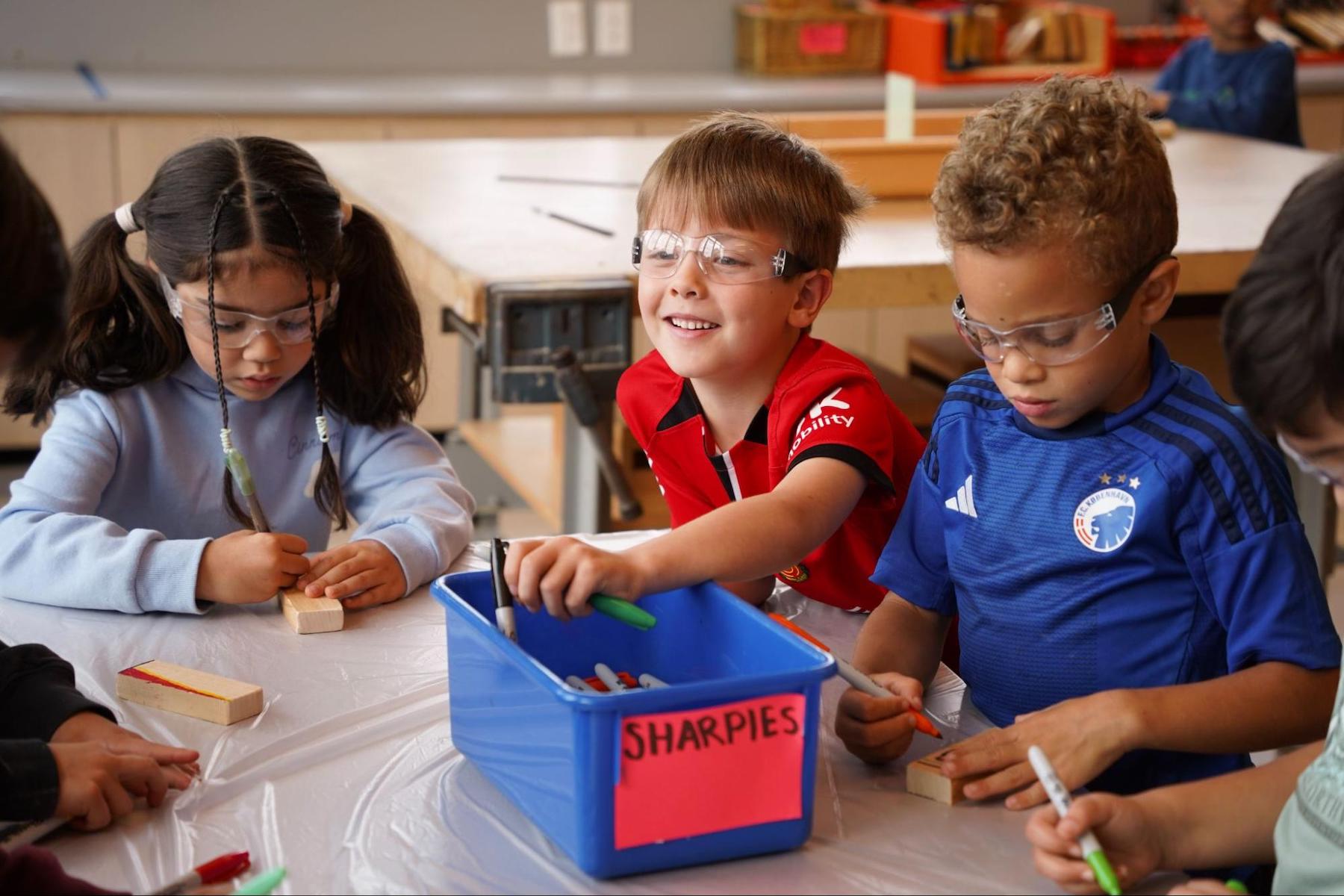
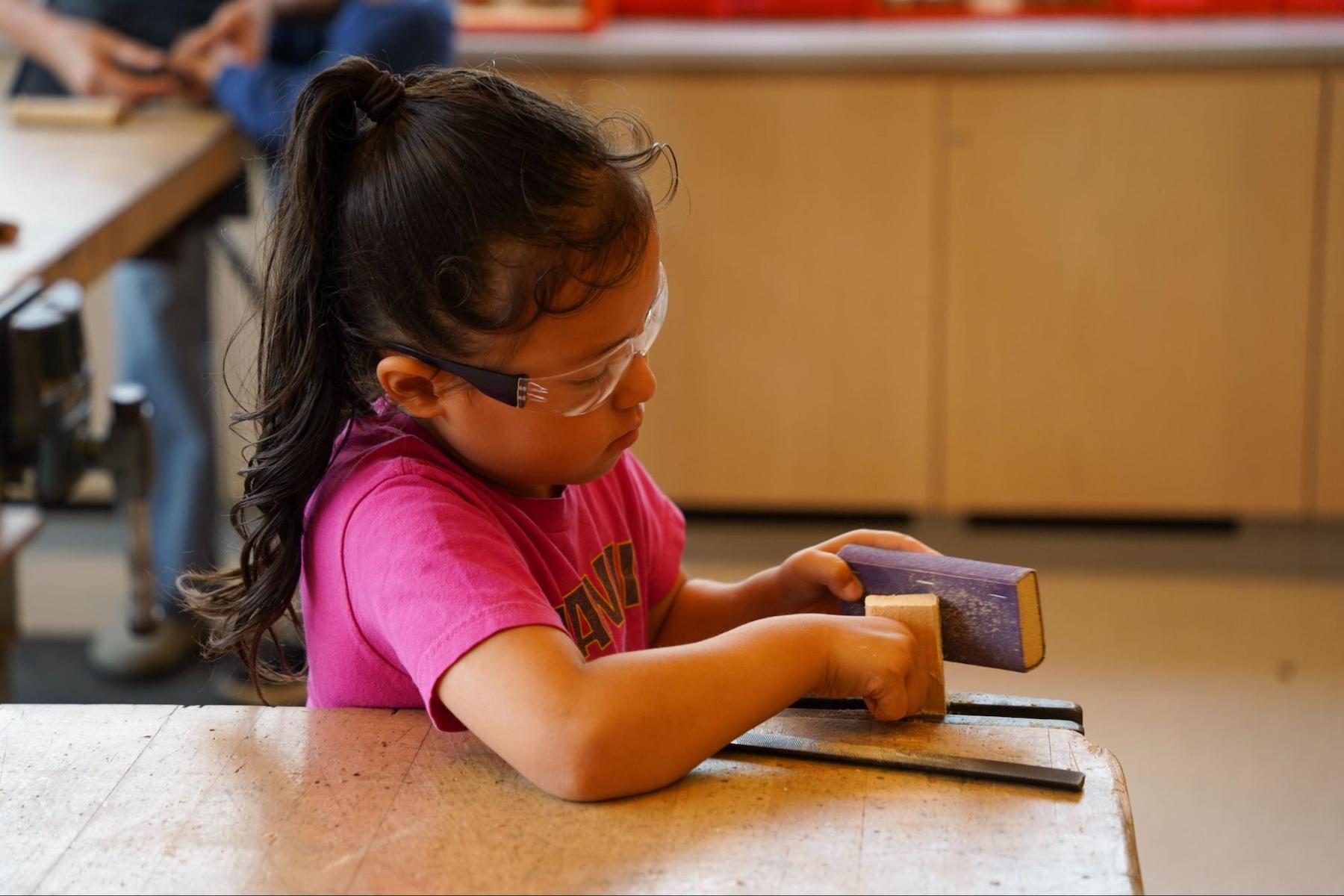
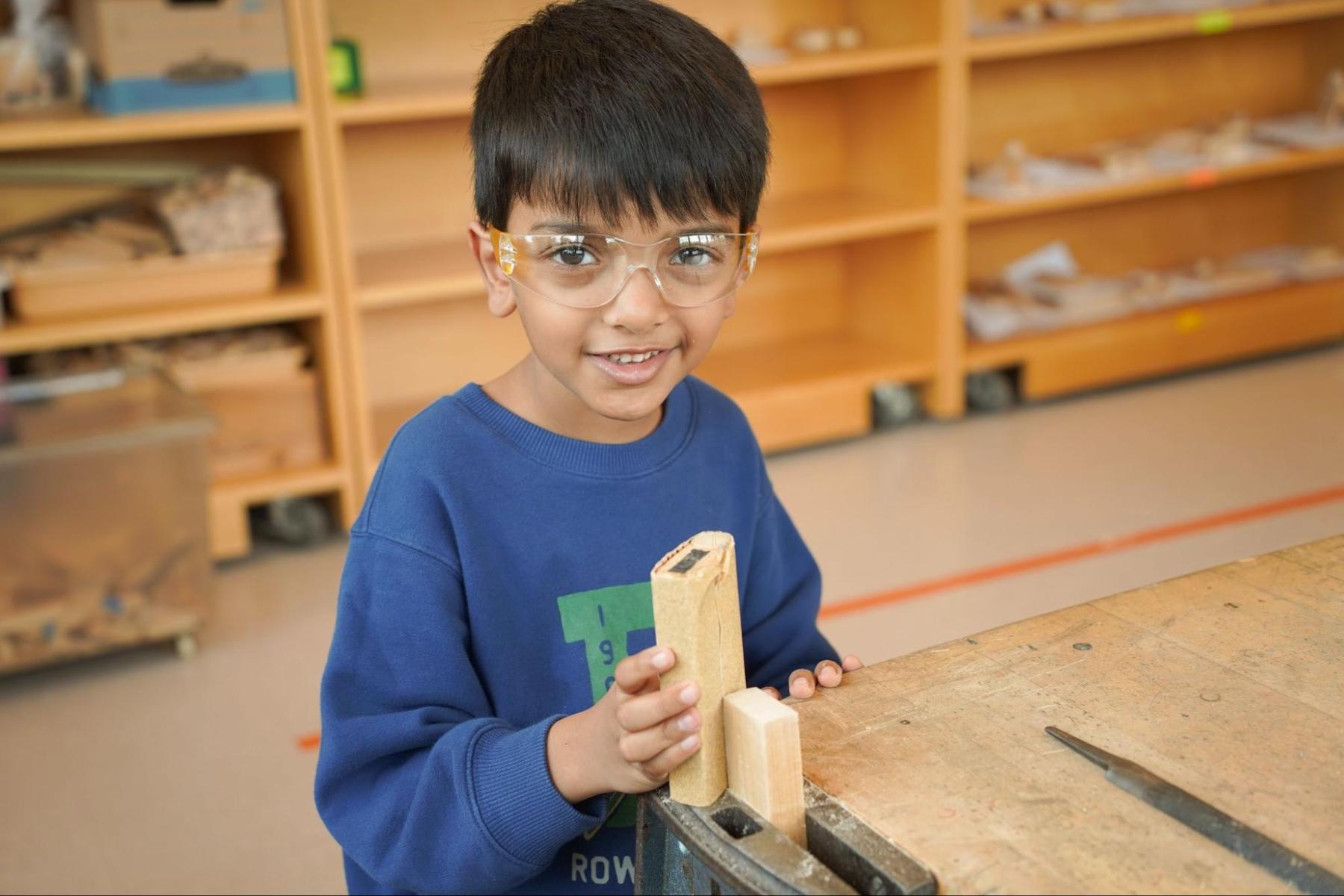
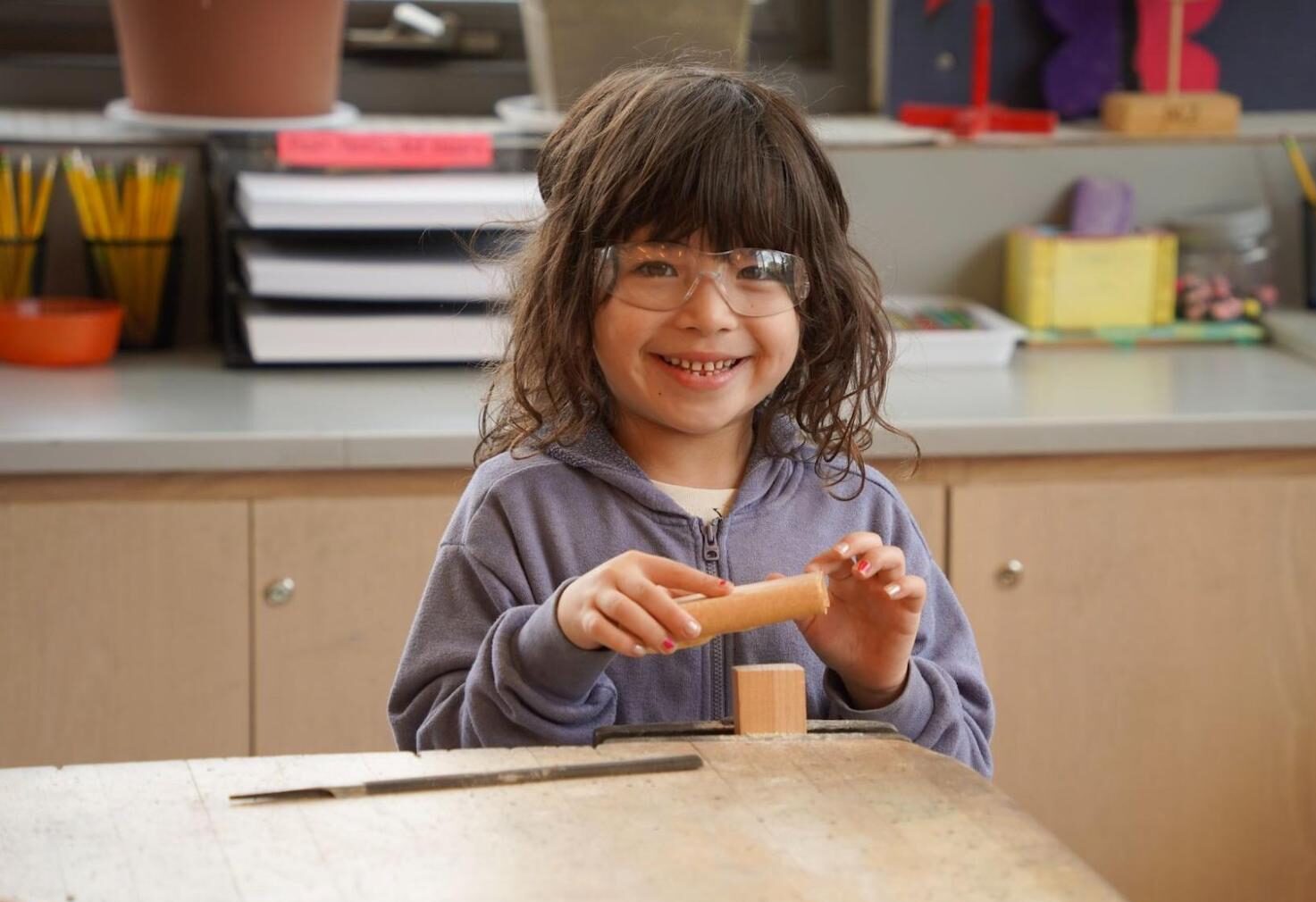
Growth is also visible in the tools the students carry through each Woodshop benchmark. At the start of 1st Grade, students make and personalize wooden sanders to use during projects up through 3rd Grade. Decorated with colorful illustrations and wobbly handwritten names, the sanders serve as memorabilia of each student’s capabilities at the start of their Woodshop experience. Over the years, the sanders become a physical record of how much those skills have evolved.
Once they enter Fieldston Middle, where they’re introduced to formal Engineering classes and more advanced Visual Arts, the hands-on collaboration and resourcefulness students honed at Woodshop remain. While running a recent Woodshop after school program for Fieldston Middle students, Baliaj watched a student she had known at Fieldston Lower decide to recreate the car that was his first Kindergarten Woodshop project.
“I said, ‘But why are you doing this?’” Baliaj recalls. His answer reminded her of what each Woodshop student works toward achieving by the end of their time there.
“He said, ‘Because when I was in Kindergarten, you had to draw and cut all the lines for me. Now I can do it on my own.’”