Core Tenets
Our Guiding Principles
“Ethics is a verb.” When Kaia Stern ’90 said this, she was evoking one of our foundational beliefs: ethics cannot exist solely as an idea or a sentiment; we must put our values into action.
We nurture our students’ capacity for morality and empathy, helping provide the framework and knowledge necessary to live an ethical life. We teach our students how to think critically and then act with compassion. We teach our students to ask, “How am I contributing?” and “Is this right?” We teach our students to confront questions of power and privilege and who gets to tell their story. We lean into difficult conversations.
Ethics in Our Curriculum
Throughout our curriculum, both teachers and students are encouraged to broaden their worldviews, question the status quo, and practice ethical decision-making.
In “Ethical Issues in Science,” 11th and 12th Graders explore the role that science plays in how we make personal and political decisions. Each year, the curriculum is determined in part by the students: they choose which core topics to focus on based on articles they’ve read or news they’ve watched. They debate the issue from all sides, paying close attention to which values are at stake and who the stakeholders are.
Embodying Ethics in the Classroom
Combining the study of English, history, and ethics is an interdisciplinary course called “Freedom,” which asks students to confront what it means to be an American and what it means to be free. 10th graders in this team-taught course are encouraged to embrace the tensions that emerge from these questions — whether found in works of literature by Nathaniel Hawthorne or Toni Morrison, or as seen through the lens of American history.
Our community spends time throughout the year tackling ethical issues head-on in small-group and community-wide sessions. We suspend our normal schedule to give us the time and space needed to examine issues of local, national, or global importance.
One of these programs, called Modified Awareness Days, allows us to discuss the themes of a shared book. In 2017, Angie Thomas visited Fieldston Upper after students read her book “The Hate U Give;” our community then attended workshops and discussions throughout the day to explore the book’s lessons. Some of these workshops included:
- All Schools are Tools for Social Control: Exploring the School to Power and the School to Prison Pipeline
- Systemic Racism and Institutional Power
- Strategies for Youth of Color when Confronted by Law Enforcement
- Powering Through It: Understanding the Exposure and Experience of Trauma in Communities of Color.
During Fieldston Awareness Days, our community attends special classes, seminars, and activities revolving around a specific theme or topic for an entire school day. Recently, by request of our students, we hosted one centered on consent, which included sessions such as:
- Hooking Up in the Digital Age: 9 Pro-Tips for Navigating Dating + Tech
- From Carrying Mattresses to Hunger Strikes: Understanding and Navigating Consent on Campus
- Undoing “Slut” Shaming and Sexual Bullying
- What Makes a Culture ‘Rape Prone’ and What Can We Do About It?
By providing the time and space for these events to take place, we are declaring firmly that ethics — the exploration of what it means to be a moral and responsible member of society — is at the heart of what we do here.
Beyond ECFS
The goal of our progressive education in New York is to improve the world around us, not just within the walls of our school. It’s common for our students to organize community service events, and for many across the ECFS community to join these events. Fieldston Upper students organized a day of service with Rise Against Hunger, an organization that aims to end global hunger by 2030. Our students were joined by faculty, staff, families, and alumni — volunteers ranged in age from two to eighty years old. By the end of the day, volunteers had packed and shipped over 10,000 meals to developing nations around the world.
Ethics is central to all that we do. We consider multiple perspectives, practice radical empathy, nurture care and compassion, and tackle difficult questions about issues and problems that are seen and unseen throughout our curriculum and our community. Students and adults alike are expected to be responsible not only for themselves but for the health and success of their peers.
At every age, in developmentally appropriate ways, our educational program not only serves our students’ growth as citizens, but strengthens their skills as scholars.
We believe the most valuable learning experience involves reflection, detailed investigation, critical analysis, and contextualized understanding. We believe in growth mindset education practices, and provide our students with opportunities to practice these skills starting from a young age. Projects are designed to offer a learning experience that is challenging and engaging. Students are encouraged to use their imaginations and to look at their subject matter from a range of perspectives. We place ethics at the heart of all that we do, so we know that feeling empathy, offering a balanced and fair argument, and making ethically-informed decisions requires approaching a subject from multiple angles or lenses.
Growth Mindset Education at Fieldston Lower
By approaching a single subject from different angles, our students are able to view their education as holistic and interconnected. In Kindergarten at Fieldston Lower, one such subject is boats. Prior to this unit, our students begin learning about community — the community of their classroom, of New York City, of the animals who live in and around our campuses. In the spring, students learn about the community aboard a ship as well as the importance of boats in building and sustaining New York City. Each student chooses a type of boat to research in depth. They have the opportunity to build their boat in woodshop, write stories about it, draw pictures of themselves on board, then compile their work into a book. In a communal effort, the class works together to build and paint a model port in their classroom, which features the boats they each built, as well as important New York City landmarks. Students then visit a boat such as a marine fireboat or a Coast Guard icebreaker, learning first-hand what each member of the crew does and what role that boat plays in the city. Imagination, critical thinking, challenge, depth — a typical day in the life of a Kindergartner.
Moving up to 1st Grade at Fieldston Lower, our students continue to experience challenging curriculum that is multifaceted and creative. This time their focus is on birds. In the beginning of the year, each student chooses a type of bird to study, like a Harris Hawk or a Tufted Titmouse. Throughout the year, the students learn all about their birds, studying everything from their anatomy to their ecosystem and how it may be affected by climate change. Students write stories about their birds, then bring them to life with clay and paint. The project is beloved within our community; students can often recall information about their bird years later as upperclassmen and even as alumni. The memories are a testament to the power of the educational experience. By learning about something over an extended period of time and from many different angles, our 1st Graders begin to understand abstract connections — a necessary skill for navigating our complex world.
Living and learning in New York City has many wonderful benefits, one being the near-endless opportunities for hands-on, challenging educational experiences. The Hudson River acts as a perfect backdrop for our 3rd Graders at Fieldston Lower to learn about the environment. Students learn about fish and plant life by wading into the water and examining what they catch in their nets. At a nearby lab in Yonkers, students test the pH and salinity of the water. They learn about the Lenape First Peoples and how their lives were intimately connected to the Hudson River. Each student is given time to sit by the river and experience a moment of quiet reflection away from the cacophony of the city, during which time they are encouraged to write poetry and paint with watercolors. Over the course of the year, the students develop their own personal connection to the river; they learn to appreciate its historical, cultural, and ecological importance to New York. When they then learn about the effects of climate change on the river, they are inspired to act — not because they are told to, but because they genuinely want to help preserve the river. Towards the end of the semester, students take part in the Billion Oyster Project, an initiative of the New York Harbor Foundation aimed at restoring one billion live oysters to the harbor to filter pollution and provide a habitat for other species.
Fieldston Upper’s Uniquely Challenging Curriculum
At Fieldston Upper, there are plenty of opportunities for our students to engage with challenging curricula. In “Writing for the Stage and Screen,” 11th and 12th Graders transform short scenes into full-length plays and movie scripts. The students in the course workshop each other’s writing and learn about the value of peer feedback and constructive criticism. Students have the chance to see their work produced in the School’s black box theater — performed and directed by fellow students.
We encourage all of our students to discover and pursue what excites them. For one student, this meant scuba diving into a Pennsylvania quarry to study the growth pattern of zebra mussels. Her work was a part of the Fieldston Science Research Program, a two- to three-year commitment for students who wish to pursue intensive and independent scientific research. The students learn valuable research skills before selecting their topic, which they then spend one to two years pursuing alongside an advisor, often performing actual fieldwork. Our students engage in a learning experience that is demanding and rewarding, leading them towards a more successful and fulfilling future.
As ethical citizens, we are called not only to learn, but to use our education to improve the lives of others — to confront the questions our society faces, to navigate obstacles with our neighbors, to know when we should listen and when we should shout.
To enable our students to grapple with current issues and address problems, we must provide the resources and tools required to be well-informed and capable of making change. For this reason, our curriculum is never stagnant; our teachers are constantly updating their courses to reflect the most pressing issues of the day. We also provide opportunities outside the classroom for students to be active participants in the dialogue and work taking place around the world. Each summer, our entire Upper School reads the same book, and there are several ways in which its themes, ideas, and storylines pop up throughout the academic year.
Curriculum That Drives Change
Within our ethics curriculum, we offer a variety of courses focused on media. In one course, Upper School students examine contemporary culture — “fake news,” social media, Beyoncé’s “Lemonade” — to explore how media shapes our identities. Using this knowledge, they create mini-documentaries that are exemplars of digital activism. The 11th and 12th Graders in this course study the relationship between media and free speech, biased and unbiased journalism, and the difference between the right to privacy and a need for privacy. Students have the opportunity to lead workshops for ECFS 6th Graders on how we represent ourselves online. In our increasingly internet-driven world, we do our best to offer courses that will prepare our students to be leaders for the common good.
While studying fractions, our 7th Graders experience a curriculum that is both relevant and ethically mindful. Students perform real-world financial calculations, such as profit margin and payout ratio, for food-related companies like Dole or McDonald’s. At the end of the lesson, students are asked to consider why healthy foods like fruits and vegetables cost more than fast food. They complete a presentation that outlines the cost differences and examines the ethical ramifications of food cost and access has for our society. The students are able to approach their subject from several angles, apply their research to real-world issues, and contemplate ways to enact change where they witness injustice occurring.
Beyond the ECFS Classroom
Outside the classroom, we provide opportunities for our students to broaden their worldviews by engaging with individuals from different cultural backgrounds and with different political perspectives from their own. In 2017, we partnered with Narrative 4, an organization that uses personal stories to build empathy between strangers. 10 students from ECFS and 10 students from Swain County High School in North Carolina participated in the exchange — with students from Swain County visiting New York in October and students from ECFS visiting North Carolina in March. Before beginning the program, nearly every student shared the same concern: How will I be judged? Each student came with their own pre-dispositions and judgments, as well. By the end of the year, students from both schools acknowledged that the biases they came in with were based on stereotypes. Once those stereotypes were shattered, the students were able to connect on a deeper, more human level — something our country needs now more than ever. Students in the program held meaningful conversations about the current administration, the Confederate flag, gun culture, and racial slurs. Our modern education practices and dynamic curriculum encourages our students to be open-minded, curious, and kind.
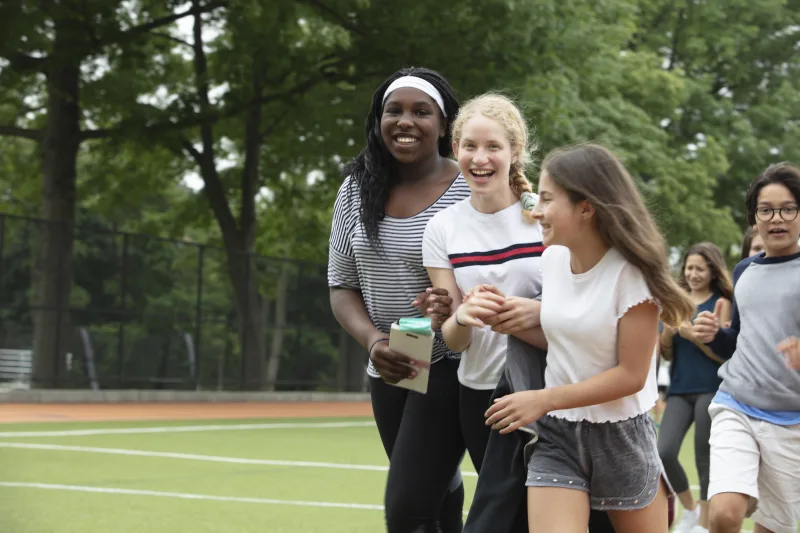
At ECFS, we offer an academic experience that is demanding and challenging — yet at the same time, we understand that joy, laughter, play, and movement are integral to our human development. When our 3rd Graders visit the Hudson River to study its ecosystem, they play with the water, write poems about their experiences, and paint watercolors of what they see. We are also fortunate to have beautiful and bountiful outdoor space on our Bronx campus, and our students take advantage of this by lying in the Quad grass or sitting together in the garden outside the library.
Playfulness in Practice
We create opportunities for fun and playfulness in our curriculum in a variety of ways. When students in our lower schools practice Spanish, they do so playfully by recreating everyday activities like visiting a restaurant or going to the doctor. They engage their imaginations while learning new skills. At Fieldston Upper, we offer a science course all about food. Have you ever wondered what makes a French fry so delicious? Or about the molecular makeup of a brownie? We encourage our students to play with their food — while practicing advanced chemistry. And one of our 5th Grade math teachers wrote a song about pi — both catchy and informative.
In our play-based learning, sometimes the outdoors comes in: our 1st Graders raise chickens or ducks inside their classroom, caring for the baby birds from incubation to hatching.
Play and creativity work closely together, and we offer as many opportunities as possible for our students to express their wonderful creativity. In our digital studio, students of all skill levels learn to create musical compositions using state-of-the-art technology. By the end of the year-long course, students will have produced CDs and a SoundCloud account of their compositions. Students also have the chance to collaborate with both the film and dance departments to create original scores for their peers.
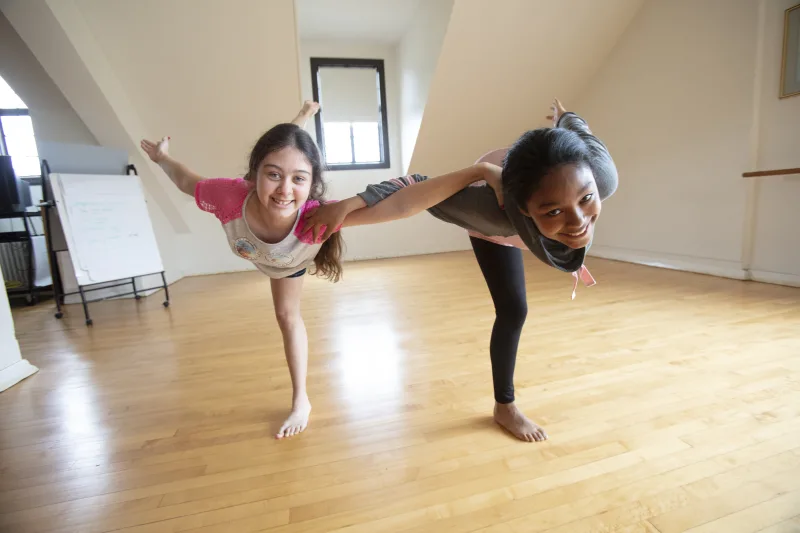
We offer a comprehensive and rigorous dance curriculum, but we also offer courses to students of all skill levels who just want the time and space for joyful movement. Any student may choose to take a weekly dance class designed to get them moving, sweating, and connecting with their bodies. Students learn popular choreography from movies, Broadway shows, and music videos. Students have fun, express themselves, and get their heart rates pumping.
The Results of Hands-On Learning
Play and movement are vital to our work at all ages. In keeping with progressive practice, students learn by doing. For us, challenge and laughter are often complementary. We also ensure students have plenty of time outdoors, both when studying and in times of leisure. Above all, we find ways both intentional and spontaneous to demonstrate joy, gratitude, and excitement for our experience and each other.
We are committed to making our school a place that truly belongs to all of us. This responsibility of creating an inclusive school environment in NYC is shared among the administration, the faculty, and our students and families. The job of making our community more inclusive cannot be achieved by one person alone; we must work together, engaging each other in ongoing dialogue so that all students feel a sense of belonging in our school and have opportunities to be affirmed and validated in the spaces they occupy.
In 2013, we launched a structured program called CARe (Conversations about Race, Ethnicity, Ethics, etc.). The program involves students and families at Fieldston Lower and Ethical Culture and creates one of many opportunities for students to talk about race, ethnicity, and ethics in school. Students spend about 45 minutes each month in their CARe groups and then have an opportunity to meet together with their class or grade to share and talk about their experiences afterwards. We also offer other affinity spaces for students — for example, Students of Color, Jewish students, LGBTQ+ students, and students thinking about their gender identity. Our goal is to support the healthy identity development of all of our students.
We want to give all our students the context, reflection time, skill, and strategies to know and advocate for themselves even as they learn to become upstanders and advocate for others. We want every community member to have the understanding, empathy, and skills to address and interrupt any and all forms of bias and injustice.
Bettering Our Community
Bias feeds off ignorance. Therefore, we provide opportunities for our students to learn about — and often experience firsthand — different cultures. Each year, 5th Graders at Fieldston Lower study a variety of cultures, focusing on how each one is multi-layered and unique. In recent years, in connection with their culture study, students visited the Ganesh Temple in Flushing, Queens. During the trip, they learned about Hindu cosmology, the temple’s history, and the religious practices that take place there. They also had an opportunity to eat in the temple’s canteen and sample traditional dosas. There’s no better way to get to know and appreciate a culture than to spend time with the people, visit the spaces they hold sacred, and taste the flavors that represent their home.
Another way in which our students learn about a culture different from their own is through our partnership with the Lerata Primary School in Kenya, Africa. The mission of our partnership is to create and nurture a reciprocal relationship between Ethical Culture students and Lerata students wherein both groups expand their worldview. Students at each school contribute stories about themselves to an ongoing project entitled “A Life Like Mine.”
Nurturing Ethical Citizens at ECFS
We start with essential questions in building our curriculum at Fieldston Middle, connecting the learning back to our mission of nurturing ethical citizens. We want students across grades to have fluency with ethical questions and dilemmas and to be able to approach them from myriad perspectives. A recent essential question was: “What were the roles of men, women, and children in ancient societies?” In 8th Grade history, our teachers and students used this essential question to guide their learning, exploring primary sources about the legal or social status of women in Egypt, Greece, Rome, and medieval Europe through lenses of equity and fairness.
Spend an hour talking to any of our faculty and staff, and you’ll hear one word used constantly: process. At ECFS, what matters more than the final product our students deliver is the learning process — the practices and procedures they have mastered so they can repeat their achievements again and again. We want our students to leave our classrooms equipped with knowledge and theory, but also with a set of translatable skills they will use throughout their lives.
Building Foundational Skills
From the outset, we make sure our students know how to work with their hands. Students in Pre-K at Ethical Culture tend to the honey locust trees on 64th Street between Central Park West and Columbus Avenue. Through collecting leaves and seeds, planting flowers, and clearing the area of litter, our budding gardeners learn to be stewards of the environment and of the neighborhood. In their math classes, 2nd Graders learn to measure liquids by pouring water into graduated cylinders of various shapes and sizes. Meanwhile, in shop class, they craft their own spoons from blocks of wood, handling the saws and files and vises themselves. Back at home, when students find older family members baking a cake, pruning the garden, or fixing a broken chair, they are ready to assist as helpers.
We watch our students continue to refine their skills as they mature. Every year, 4th Graders at Ethical Culture are commissioned by adults in the division to build something they need; projects have included a magazine rack, a foot stool, bookshelves, and tables. At Fieldston Middle, 7th and 8th Graders even built and carved a storage box for the Admissions Office. If students crack the screen on their phone or blow out the speaker on their laptop, the student repair centers at Fieldston Middle and Upper can teach them how to take apart and patch up their electronic devices themselves. Our campus itself is filled with reminders of our students’ handiwork, from b. Should they go on to study architecture or engineering in college, our students know the calculus and the physics to ensure their designs are viable, but they’ve also experienced the physicality — and the joy — of constructing something from scratch.
Spotlighting Soft Skills
Just as important as learning to work with one’s hands is learning to master “soft” skills like listening, leadership, and empathy. We aim to instill in all our students the habits of heart and mind that will enable them to interact with people of all backgrounds. We believe doing so is critical to being an engaged citizen, no matter what profession one may choose or where one may ultimately live. In 7th Grade English, students participate in “fishbowl” discussions in which half the class debates a topic in the center of the room while the other half surrounds them to observe. Through the process of providing feedback to others and being conscious of one’s own speech and behavior, 7th Graders become more effective communicators.
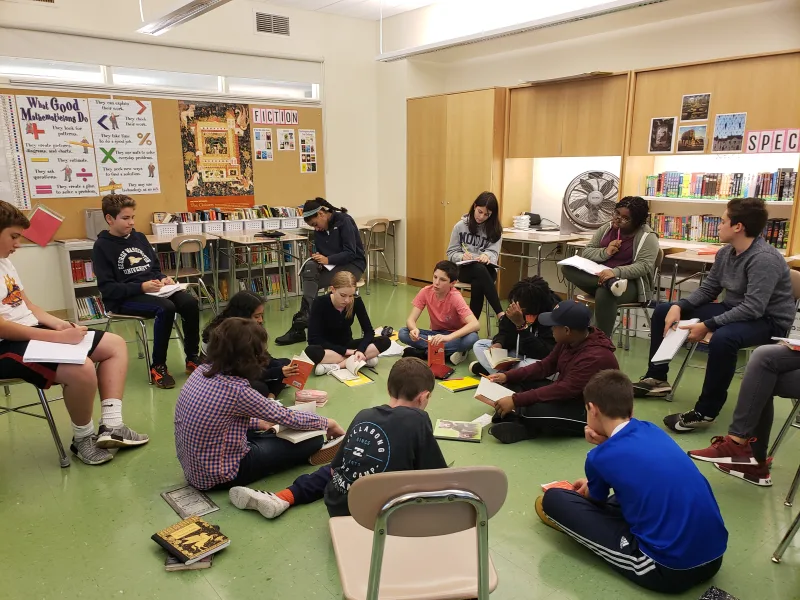
Similarly, understanding how to be a team player is a skill with far-reaching ramifications. Through role-playing activities in which 4th Graders must collectively make a choice that affects the entire group, they learn that voting isn’t the only way to move forward — and that when decisions are made by consensus, everyone shares in the outcome.
The Foundation for a Successful Future
Many of our electives at Fieldston Upper teach skills that are valuable in the workplace and beyond. Want to learn how to take professional photos, report for a newspaper, write code, or edit images and layouts in Photoshop and InDesign? There are classes for that. When it comes to the ethics classes that all students are required to take, our curriculum is committed to ensuring our students apply their learning to the world around them, and nowhere is that more salient than in Fieldston Upper classes. 11th and 12th Graders are required to take two electives that explore the ethical issues inherent across fields of study and in daily decision-making — from science and sports to technology and media consumption.
From their earliest days through graduation, our students practice empathy, work with their hands, mature as leaders and communicators, and learn enduring skills. They cultivate a mindset for growth, a capacity for self-awareness, and an ethical center that will sustain them in school and beyond.
We aim to promote collaboration and dialogue, both within and beyond the classroom walls. In challenging our students to relate their personal growth and achievements to the growth and achievements of others, we encourage them to see their inherent interdependence, within our own school community and beyond.
We start by showing genuine interest in the worlds from which our students come. Our students bring a diverse range of backgrounds to the classroom, and we encourage them to reflect on and celebrate the communities that have shaped who they are. Kindergarteners cover their neighborhoods as journalists, interviewing local personalities and business leaders. When they return to school to report on their findings, they have become active, engaged members of their community.
In Practice: Service Learning at ECFS
When it comes to service learning curriculum, a simple action in one grade can form the basis for meaningful work and reflection later on. Visit one of our lower divisions, and you may find our Pre-K students scurrying around the hallways, passing snacks to building maintenance, security, and other staff. When they are older, students make sandwiches for a local food kitchen and help to hand them out, learning about the people who visit the food kitchen and the many reasons someone might need a sandwich on a given day. Intentionally cultivating empathy is essential to our mission and serves as a curricular and co-curricular throughline, from service learning projects and peer-based advisory programs to national political activism.
One service learning project has become a much-anticipated part of the curriculum for Ethical Culture 4th Graders. The Spanish Book Project coincides with their Social Studies immigration study where the students create books for unaccompanied minors who are entering the United States — the book will be included in a welcome bag. Throughout the process, our students ask questions to ensure their books are culturally sensitive for their new friends.
Closer to home, our students learn how their education is connected to the education of others. Upper School students befriend and collaborate with peers whose educational experiences differ from their own. Collectively, students at the three schools work on community service projects and host discussions on issues like gun violence and race relations, establishing common ground.
We live as part of a community, and we recognize the responsibility each of us has to the whole. Our academic program is infused with the ideals of collaboration and care for others, rooted in mutual understanding and the promise of genuine relationships.
Case Study: A Year of Social Learning
Each student’s independence experience at ECFS is unique, distinguished in part by the classes they take, the extracurricular activities they pursue, and the teachers and peers they encounter. All of our students, however, are unified by their membership in our school’s community, which encourages them to help each other in their growth as much as it encourages them to engage with communities farther afield. A single year offers countless opportunities to interact with other students. Take a look at what one 4th Grader might do.
In their Social Studies unit on immigration at Ethical Culture, 4th Graders might partner with KIND, an organization that serves to protect children who enter the U.S. immigration system, to create audio books, city guides, and study materials that help immigrant families prepare for the civics questions on the citizenship test.
Or they might bond with their classmates while “roughing it” in the outdoors. As part of their study of colonial life, 4th Graders at Fieldston Lower spend an afternoon living as the pilgrims did, building a temporary settlement in the Ward Pound Ridge Reservation. Students gather food, construct a shelter, and map out the area, teaming up to ensure the sustainability of their mini-colony.
A 4th Grader might assume the role of teacher for a day. After learning about the three branches of government, the Constitution, and the Bill of Rights, the 4th Grade civics unit culminates with a creative project of the student’s choice. Students rotate through each other’s classrooms, learning from their peers as they share the material they have mastered.
Or they might end up teaching younger peers. As part of their lessons on the importance of reusing and recycling, Kindergarteners are paired with 4th Graders to build arcade games out of found objects. These collaborations form the basis of long-term mentoring relationships.
You’d be hard-pressed to find a classroom at ECFS in which students sit silently, taking notes as they listen to a teacher. Our curriculum is rooted in lessons and projects that engage their hands, hearts, and bodies as much as they engage their minds. Why only learn about how the plantain is a food staple in many societies when you can taste, touch, and cook with it as our Pre-K students do in class? Wherever possible, our faculty aim to transform learning into lived experience.
One example is an interdisciplinary unit for our Pre-K students that bridges what they learn in their science and music classes. After becoming familiar with sound and vibration, students construct their own instruments from recycled materials. The unit concludes with a performance in front of the entire class — it may not be on the level of a Carnegie Hall recital, but it’s a fun and immersive performance nevertheless.
The Art of Learning Outside the Classroom
A key lesson our teachers emphasize is that learning can and naturally does occur outside the classroom setting. Thanks to our longstanding relationships with organizations throughout New York, we’ve developed programs that give our students a glimpse of all the resources the city has to offer. A trip to the Adaptive Design Association, a non-profit serving children with special needs, gave a group of 7th Graders the chance to design tools and furniture for differently abled people.
Meanwhile, at Ethical Culture, when asked to choose a service project to work on, our 2nd Graders settled on an idea that would utilize skills they’d already honed. Having sewn quilts to donate to the Lerata School in rural Kenya as 1st Graders, our 2nd Graders then knitted scarves for Win, an organization that seeks to empower the homeless women and children of New York.
Immersive experiences can be fun, too. In one off-campus trip, Fieldston Upper students biked sixty miles down the Towpath Trail, tracing the Delaware River along the Pennsylvania-New Jersey border. Beyond the stunning views the ride provided, the excursion reminded our students of the world that exists beyond New York City.
Our entire curriculum is built from the ground up to utilize hands-on, project-based approaches to education. We want our students not only to see, hear, and think, but also to make, do, and feel.
Experiential Learning Through City Semester
One of our signature academic programs is an exemplar of experiential learning for 11th Graders. City Semester is an elective that immerses selected students in the city as their classroom, allowing students to apply what they’ve learned in the classroom to the outside world. It’s an interdisciplinary, experiential program that encourages students to create their own learning experiences and address urban policy challenges affecting sustainability and equity as they travel across all five boroughs for their studies of topics such as immigration, arts and literature, water, and more.
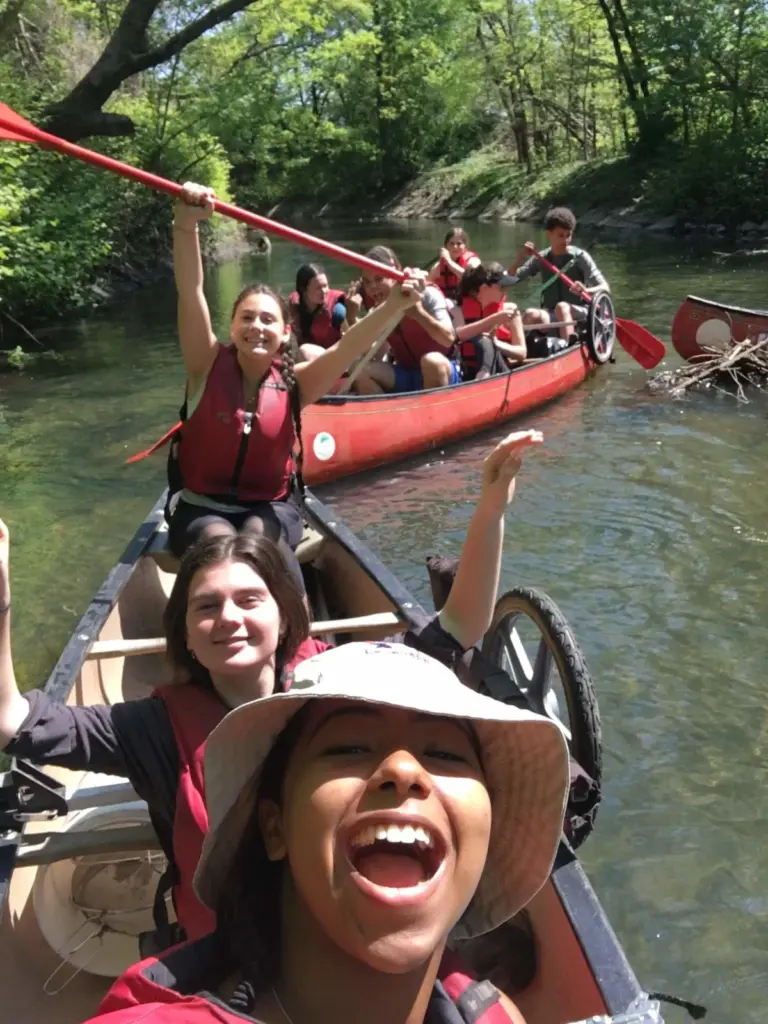
City Semester incorporates all academic subjects, tying different disciplines together in a unified course of study. A three-day canoe trip down the Bronx River serves not only as a good workout, but also a chance to explore a complex ecosystem. An assignment to interview immigrant communities in Spanish or Mandarin is an opportunity to practice a second language. When students draft policy memos as one of their culminating projects, they must draw upon the entire spectrum of what they have learned, from statistics to sociology, ethics to essay-writing.
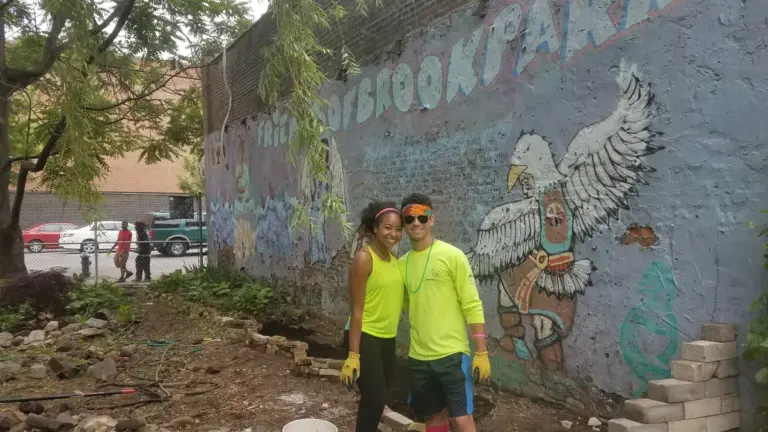
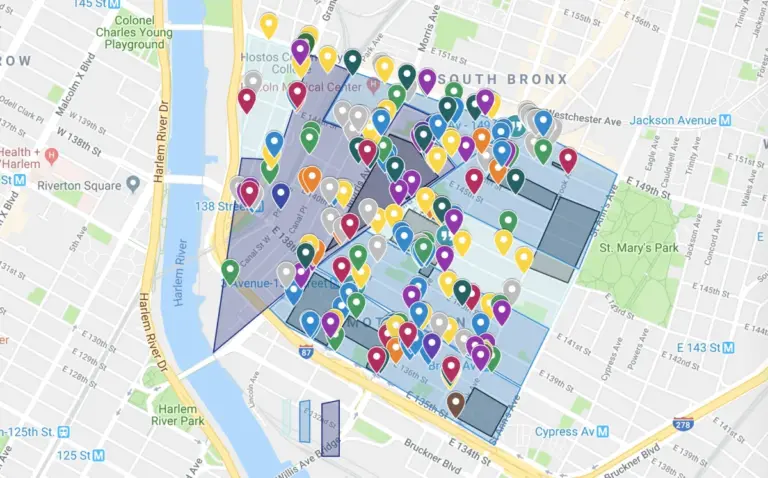
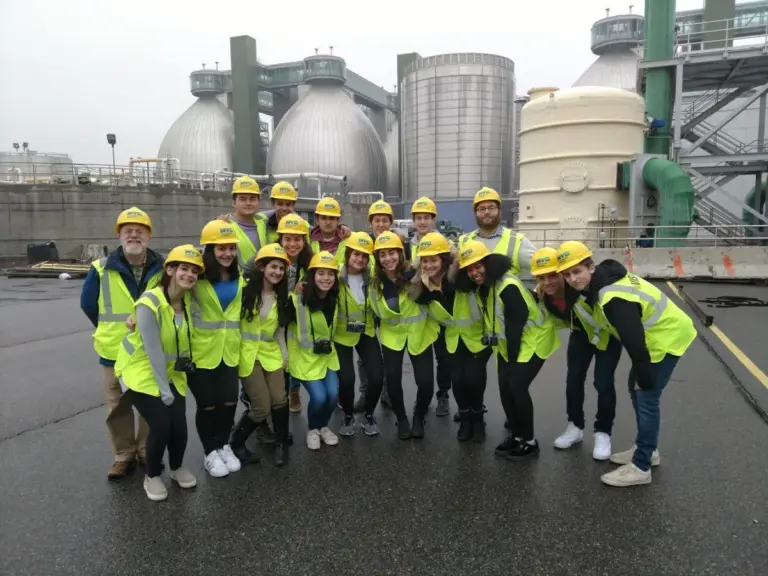
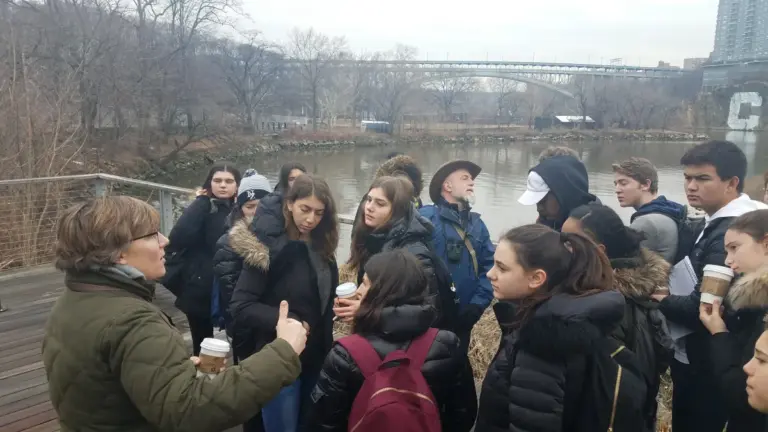
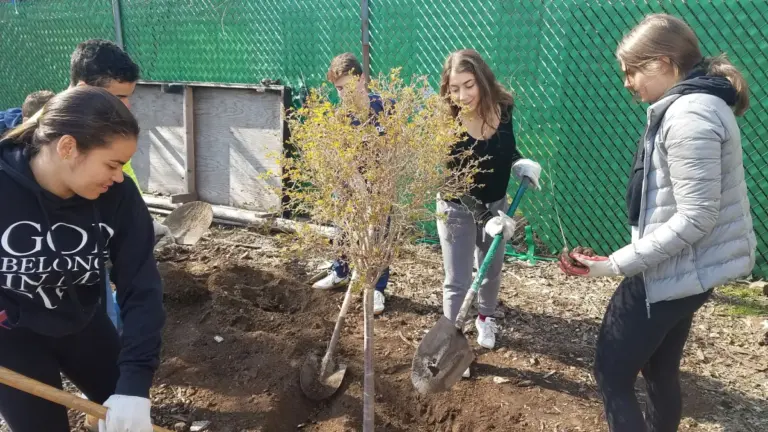
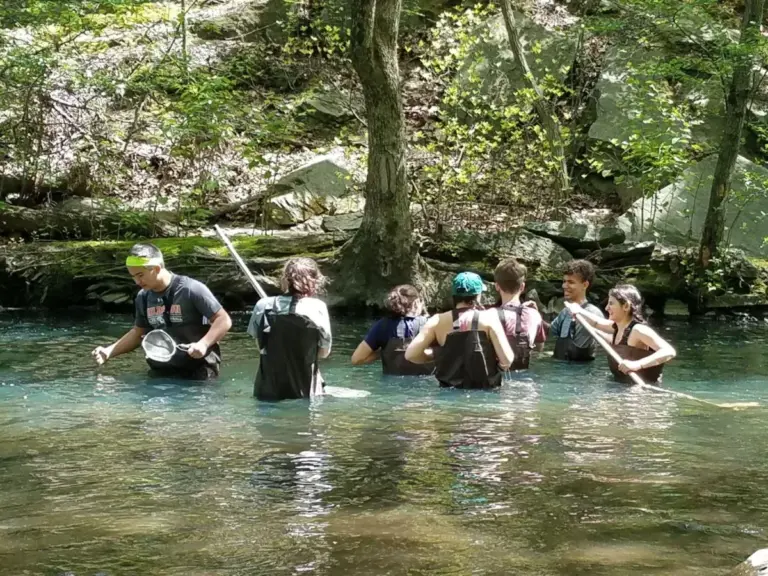
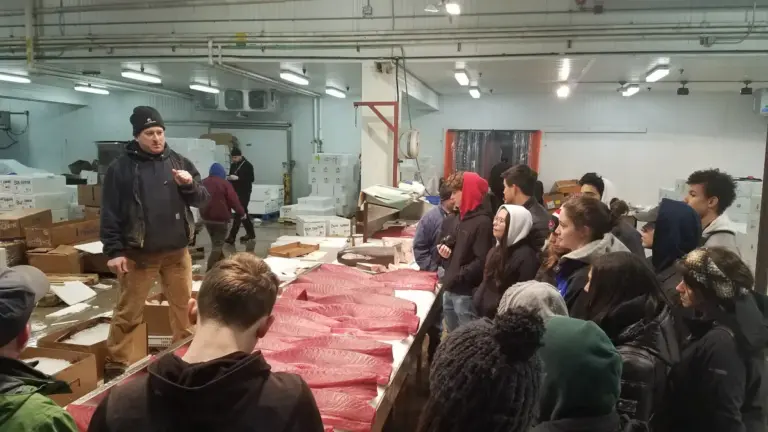
Because City Semester is a full-day, full-semester program, it offers the flexibility to craft schedules that extend beyond normal school hours and well beyond the school’s two campuses. As part of their service learning work, students partner each year with local organizations to make a direct impact on the community. Last year, City Semester participants transported unwanted chickens from New Jersey to Mott Haven and planted tomato plants in the community garden to provide fresh eggs and produce to residents. The experience epitomizes what it means to be an engaged citizen.
In our community, we strive to prioritize self-care and attentiveness to others. Our faculty and staff take on the role of caring mentors who support students’ physical, social, and emotional well-being. To ensure that our students are learning, we must first ensure that they are healthy.
Research consistently demonstrates that children who are happy and who feel included in their community learn more effectively, so we introduce a foundation of social-emotional learning at an early age. Across both lower divisions, teachers facilitate open sessions in which students anonymously share their anxieties with the class and their peers respond, empathizing and offering solutions. Many teachers also implement a “humble thumbs” policy: instead of raising their hands, students signal their understanding of a subject by flashing a thumbs-up at desk level — a discreet gesture that allows teachers to gauge overall comprehension without giving rise to competition or embarrassment.
Along with our commitment to social-emotional wellness and comprehensive student health, we embrace differentiated instruction and various approaches to learning. One of the first assignments Fieldston Lower students are assigned is “homework homework” — making weekly schedules to track busy days, to identify difficult subject areas, and to reflect on preferred work settings, whether alone or with others, at home, or somewhere else. On a visit to our lower divisions, one might find students wearing noise-canceling headphones to focus on their work or sitting with a small group of classmates in the hallway to collaborate on a project. All of this is intentional and encouraged.
Our Commitment to Health in the Classroom and Beyond
Fieldston Outdoors is a six-week summer day camp that allows lower school students to engage with nature. A day might include a hike through the Palisades or a canoe ride down the Piermont Marsh.
Even as our students progress into Fieldston Upper, we maintain our focus on ensuring that they take care of themselves. The narrative across the country is that the pressure of standardized tests and college admissions has created an unprecedented amount of stress for high school students, and particularly for 11th and 12th Graders. At ECFS, our College Office tries to mitigate that stress by making the application process student-centered and driven by fit. The first question our counselors consider is not how selective a school is, but whether the geography, size, program, and environment match what the student desires. Almost all college-related meetings are conducted face-to-face and one-on-one so that students feel comfortable opening up about questions they may be embarrassed to share with their peers. The mind, of course, operates as part of the body, so a commitment to ensuring our students are healthy socially and emotionally is a commitment to keeping their bodies healthy as well.
Our lunch encourages healthy eating and features daily vegan and gluten-free options, including a full salad bar; meals can also be customized to accommodate specific dietary restrictions. Students in all divisions are required to take physical education or an equivalent substitute, such as a sport or dance.
Meanwhile, extracurricular athletic options abound. On the court and the field, our Fieldston Eagles thrive and routinely distinguish themselves.
There’s an inherently social aspect to healthiness that we also aim to tap into. Through our Student-to-Student (STS) program, Fieldston Middle mentees are paired with Fieldston Upper mentors, who coach them twice a week on ethical issues. The program builds a positive social framework for everyone: younger students have peers to look up to as role models, and older students take on the responsibility of student teachers.
Supporting Student Well-Being at ECFS
In all our work, we are mindful that healthiness is contingent on self-care, self-respect, and a sense of belonging. Not only do we embrace diversity and inclusion among our students and faculty, but we also build classes and workshops that give voice to marginalized communities. A two-day exploration of the successes and failures of the beauty industry in addressing the needs of women of color, for example, may offer Fieldston Upper students the chance to dismantle white-dominant beauty standards. “History of Sexualities in America,” an interdisciplinary seminar that traces the evolution of views toward sex, gender, and sexuality from colonial times to the present, reminds our students that the narratives of women and LGBTQ+ people are worthy of examination, discussion, and celebration.
The health of our students is foremost in our minds. We work diligently to ensure a safe physical environment, to attend to social and emotional health, and to offer a robust athletic program and wholesome dining options as well as abundant support networks. Students regularly practice habits that foster self-care and that help them become better learners, friends, and partners.
Our commitment to progressive education gives our teachers the freedom to tailor their curricula to the needs and curiosity of their students. Faculty support different approaches and alternative learning, staying attentive to student interest that can lead to rich topical explorations. Where our students find inspiration can vary from a recent world event to a shared culture to a new passion — no matter the origin, our teachers are ready to respond.
When one 2nd Grader at Fieldston Lower asked how researchers know about the existence of deep sea creatures, the ensuing talk about underwater exploration led the teacher to take the class on a field trip to Hackensack, New Jersey, to see a former World War II submarine. Back at school, students designed a cardboard submarine that filled half the classroom. The submarine unit has now become a much anticipated part of second grade, covering topics from engineering principles to Handel’s Water Music.
The Meaning of Responsiveness at ECFS
Being responsive allows our faculty and students to keep classwork interesting, but beyond maintaining engagement, it also helps our teachers to make core concepts more understandable. Sometimes it’s a matter of finding ways to relate the lessons of the classroom to aspects of our students’ daily lives. Sensing that their students were finding multiplication tables too abstract, 3rd Grade math teachers took their classes to Whole Foods, where the rows and columns of fruits, vegetables, and cans helped students visualize “4 x 8” and “6 x 7.” Ask your student to do some quick mental math the next time you’re at the grocery store.
And sometimes, being responsive just means listening to what students want to eat for lunch. After a group of 2nd Graders rallied the class to draft a petition to the head chef requesting non-fruit options for dessert, the cafeteria now periodically offers brownies, cookies, and other sweet treats that leave everyone wanting seconds.
While many courses are offered every year, their content may be entirely restructured based on the makeup of the students enrolled. The Fieldston Upper Spanish courses for heritage speakers, for example, take into account the linguistic and cultural variations associated with students’ families’ countries of origin. Each year’s curriculum is driven by student interest: a literature-loving group might read Isabel Allende’s House of the Spirits, Gabriel García Márquez’s A Hundred Years of Solitude, and the Popol Vuh, a Mayan sacred text.
Beyond Our Curriculum: The Alternative Learning Program
This is a sampling of the many innovative courses our faculty teach — but what happens if, after experiencing ECFS’s breadth of classes, students still want to explore something more? In that case, they can create something for themselves. Every two years, Fieldston Upper students, faculty, staff, and administrators choose niche subjects to probe in a two-day experiential learning experience called ALP, or Alternative Learning Program.
Workshops are often student-generated and student-led or co-taught with a faculty member who offers holistic student support and guidance; past topics have included Bollywood and Indian dances, designing Rube Goldberg machines, and the art of roasting and cupping coffee.
A deep interest in a specific area of study leads many of our students to pursue senior projects and independent studies, which can represent the culmination of their personal and academic growth at ECFS. Ranging from art shows to research presentations, these projects are entirely self-directed and illustrate the myriad interests of students at our school. At the end of each academic year, graduating seniors present their work in an exhibition for the entire community to see.
The Result of Responsive Teaching
Learning happens best when students are motivated, when they are supported, and when they can see how their classes relate to their own lives — in short, when education is truly student-focused. In acknowledging the wide range of learning strengths, challenges, and interests that flow through our classrooms, we develop strategies and lesson plans to meet students where they are and give everyone a chance to succeed.