
How two alumni are building successful careers shaped by curiosity and conscience
Ten years after graduating from Fieldston, Hollis Lehv ‘16 and Aurielle Kaminski ‘16 are busy building careers shaped by creativity, leadership, and a strong sense of ethical responsibility. Recently named to Forbes Magazine’s 30 Under 30 list, both alumni have begun impactful careers in very different fields, Hollis as an engineer in the games industry, focusing on accessibility and player experience, and Aurielle as the founder of Agency Eight, a creator- and community-driven marketing agency.


Aurielle Kaminski ‘16 (left) and Hollis Lehv ‘16 (right)
While their paths look different, both share a foundation shaped at ECFS. We sat down with Hollis and Aurielle to discuss their journeys since Fieldston, the decisions that shaped their work, and the lessons they carry with them today.
After Fieldston, Hollis attended Columbia University, where she began to see the gaming industry as a serious career path. “I always played games growing up,” she said. “But it wasn’t until college that I realized I could do something that was both creative and technical.” A game development club, supportive mentors, and early internships helped her find her footing in the industry, and ultimately led her to her current position as a senior software developer at Riot Games.
Aurielle’s path to founding Agency Eight was not linear. After Fieldston, she attended NYU’s business school, initially exploring fashion before moving into sustainable business and, later, creator marketing. Early startup roles helped clarify what she cared about most: building community-driven growth and working with brands that aligned with her values.
“It’s surreal,” Hollis said about being named to the Forbes 30 Under 30 list. “But it really reflects a series of decisions rather than one big moment.”
Aurielle agreed, noting that the timing made the recognition especially meaningful. “I’m still very much in the middle of building something,” she said. “It feels like encouragement to keep going.”
Both Hollis and Aurielle began at ECFS in 9th Grade and still feel the impact of those four years today. Aurielle described herself at Fieldston as someone who “tried everything,” balancing academics with dance, leadership programs, part-time work, and extracurricular activities. She credits the School with fostering an entrepreneurial spirit and a sense of ownership over her work.
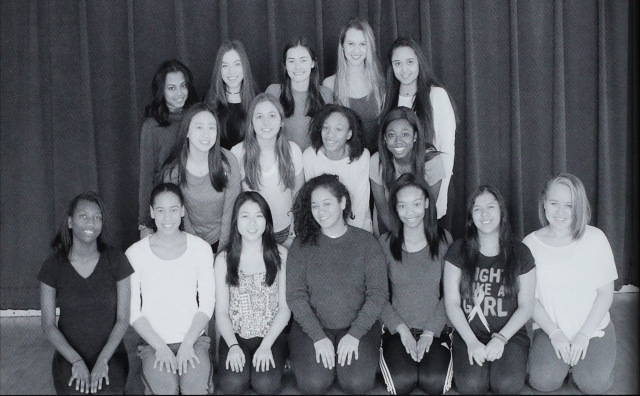
Aurielle (top row, second from left) and the Fieldston Dance Company in 2016
“There was a lot of encouragement around self-sufficiency and initiative,” she said. “It taught me to dream big, but also to take responsibility.”
Hollis, whose father fostered in her a love of technology and gaming from a very young age, remembers Fieldston as a place that encouraged intellectual appetite rather than narrowing it. “I took as many classes as I possibly could,” she said. “I loved learning, and that was supported.” She recalled student-led teaching days when she shared her interest in game design and theory, an experience that reinforced the idea that passions outside the formal curriculum mattered.

Hollis was also a music major during her time at Fieldston
Both alumni spoke at length about the ethical foundation of their ECFS education. Hollis vividly remembers 9th Grade ethics classes that required students to argue multiple sides of an issue. “It was the first time I realized that I believed certain things without really knowing why,” she shared. Being asked to research opposing perspectives reshaped how she approached complex questions, and at times, even changed her viewpoint completely.
Aurielle similarly recalled a gender studies course that challenged her assumptions and expanded her sense of empathy. “There were conversations that I had never been exposed to before,” she said. “It really shaped how I think about people, power, and responsibility.” One project, examining the history of beauty standards through marketing and consumer culture, continues to influence how she approaches her work today.
Those lessons also show up in practical ways. Hollis now works on accessibility features in games, an area where ethical considerations and design decisions intersect daily. “Accessible design is just good design,” she explained. “When you think about who might be excluded when making certain decisions, you end up making better products for everyone.”
Aurielle described navigating similar tensions in the agency world, recently declining a potential client after learning the founder’s values conflicted with her own. “It would have been easy to overlook it,” she said. “But I couldn’t stand behind it.” Decisions like that, she explained, are directly informed by the strong values she developed at Fieldston.
As the conversation turned to advice for current students, both emphasized the importance of relationships and curiosity. Aurielle encouraged students to maintain connections with peers and mentors, even when paths diverge. “Your network is everything. And you don’t always realize that until later.”
Hollis offered the value of a sense of direction, even if it continues to evolve. “Having a North Star helps,” she said. “And curiosity is always valuable. Being open to changing your mind is one of the most important skills you can have.”
Now approaching their ten-year high school reunion, Hollis and Aurielle reflected on how much has stayed with them. Their careers look different, but both continue to draw on the same foundation: a belief in thoughtful inquiry, ethical responsibility, and the importance of community.
“It’s good to look back sometimes,” Aurielle shared. “And remember where those parts of you came from.”