When NASA launched its first human mission to lunar space in more than 50 years, many of Fieldston Lower’s 3rd–5th Graders joined a Google Meet during their Spring Recess to watch the historic live launch of Artemis II together. As the astronauts aimed to travel farther from Earth than any other human has ever been, these students and Math and Science Teacher Michael Wilkinson prepared to explore the moment as immersively as possible.
Space exploration is familiar territory at Fieldston Lower. The 4th Grade “Ice Quest” unit challenges students to lead a simulated lunar mission using LEGO robotics technology to build a rover to collect data from the moon’s surface. This collaboration between Wilkinson and Ethics and Technology Lead Kim Deveaux is modeled on research conducted by NASA’s Jet Propulsion Laboratory (JPL), teaching students the transformative power of using technology as a tool for discovery.
The timing of Artemis II gave students the opportunity to connect their learning to a real-world mission as they watched astronauts venture toward the same lunar surface they had studied in class. After over 60 students gathered virtually to watch the mission launch, the 4th Graders spent their first week back at school following the mission’s 24/7 livestream. The feed offered views from inside and outside the Orion capsule, as well as live conversations between Mission Control and the crew. Students witnessed exciting moments and engaged in lively discussions about what life was like for the astronauts and what their mission was hoping to accomplish.
Wilkinson emphasized that NASA is using this mission and its spacecraft to test the longevity of systems and capabilities “so we can keep doing this, and go farther for longer.”
A close look at both the launch and the crew’s “behind-the-scenes” moments inspired students to wonder about the spectacular and routine aspects of space travel.
“It’s amazing to know that we are back in deep space and that, in our lifetime, someone may go to Mars,” said Lucas D. ’34. “I like space a lot, and watching this mission really motivated me. Even if something’s hard, it’s worth it.”
“I thought it was heartwarming that the crew would always choose Earth over any other planet,” added Jeehyun C. ’34 in response to astronaut Christina Koch’s livestream comment reaffirming the astronauts’ love for Earth.
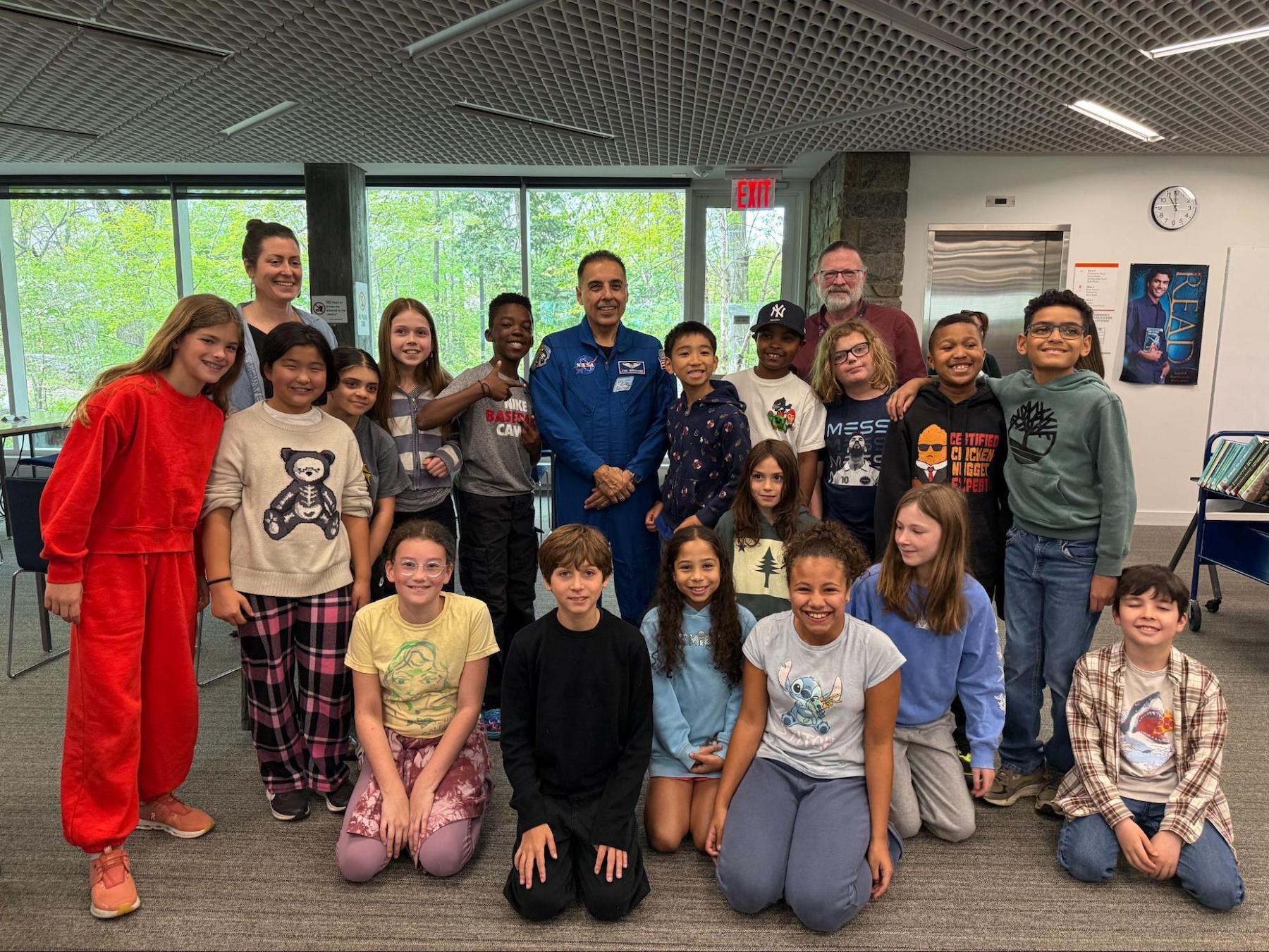
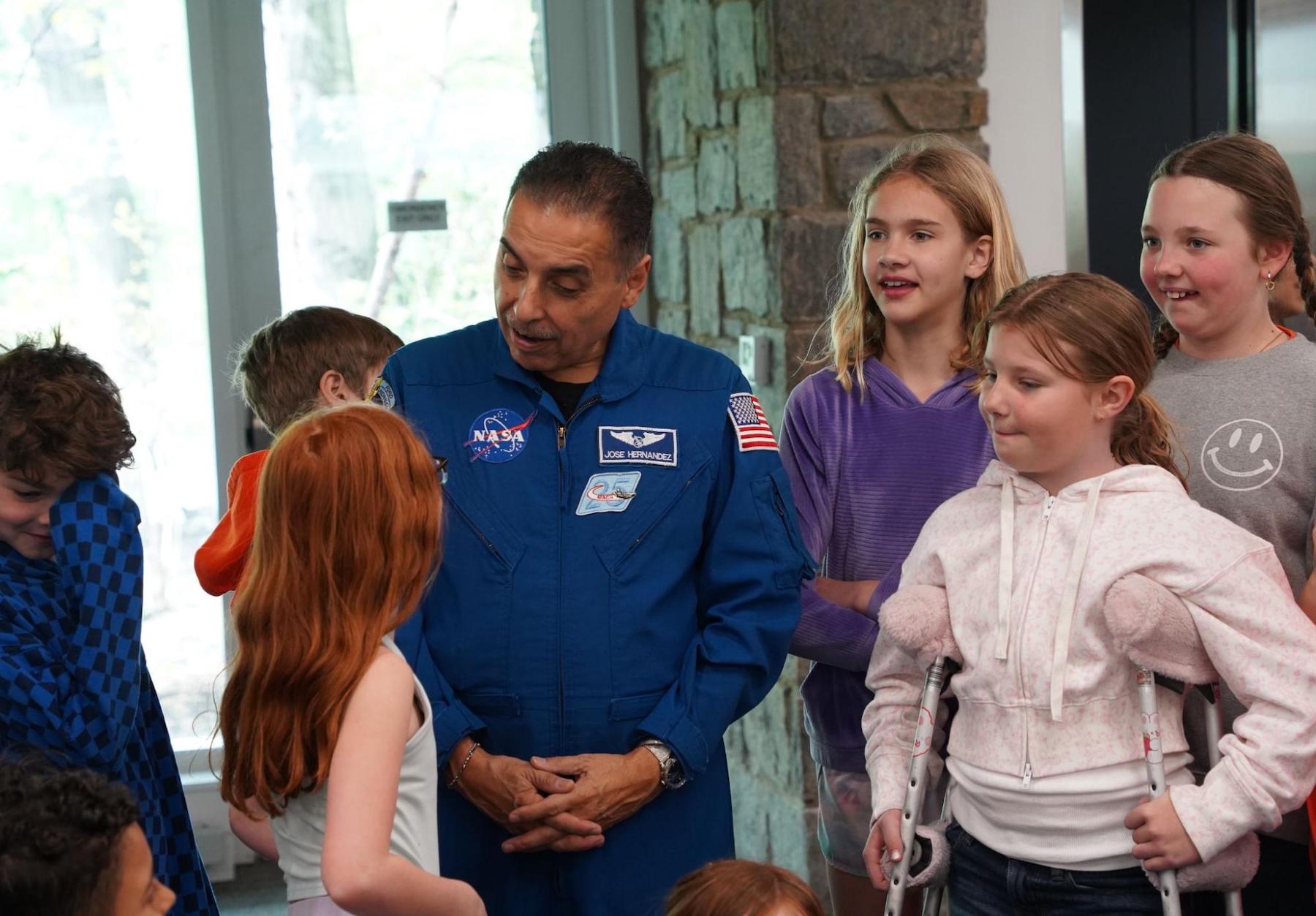
Timing proved serendipitous when, soon after Artemis II returned home, Fieldston Upper welcomed NASA astronaut Dr. José Hernández to speak in alignment with its community read of Andy Weir’s Project Hail Mary. Wilkinson took his 4th Grade classes to meet Hernández during a meet-and-greet session at Tate Library, and students were in awe of the real-life astronaut before them.
The experience with Artemis II is also connected to Fieldston Lower’s broader approach to math education. At a recent Math Morning conversation with parents and guardians titled “Cultivating Mission Mindset,” Wilkinson, Math Lead Peggy Tsue, and the rest of the Math Department reflected on the program’s guiding principles and their alignment with the mission.
“As I was watching the mission, I kept hearing, ‘If you want to go fast, go alone. If you want to go far, go together,” Tsue shared with parents and guardians. “We stress togetherness here; that it’s great to know your math calculations, but you’ll only get so far. What we see as developing this arch of mission mindset is a desire to chase the unknown, supported by the skills, capacity, and characteristics within you that build over time. ”
Wilkinson expanded on this idea, highlighting the collaborative and creative nature of mathematics and science. “Mathematics is a creative, ongoing, exciting, beautiful, curious, awesome, human experience,” he said. “It doesn’t happen in isolation. There’s not one solution in mathematics. There may be one answer, but there are many ways to get there.”