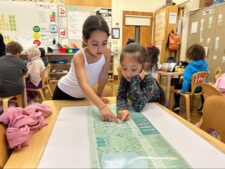
When the Spanish program at Ethical Culture began over 20 years ago, Spanish Teacher Joan Singer had the opportunity to incorporate an ethical lesson of connection into her language curriculum. Language classes at ECFS challenge students not only to learn new vocabulary and to interpret conversations in different ways, but also to consider the people and cultures behind the language. A chance offering ensured that a key project for Ethical Culture 5th Graders encompassed all of that, encouraging a perspective beyond the walls of their classroom.
This particular project began when a former Ethical Culture parent/guardian contacted ECFS to share her work as a photographer for HeartCare, an organization that provided medical services to children in Central America who needed heart surgery. While documenting the program’s work with patients, the parent noticed that, while waiting for their operations, children didn’t have books to distract them, and that many of their communities lacked reliable access to books altogether. In response, Singer launched a project that asked her students to create original picture books in Spanish for these children.
Although Singer was initially daunted by the speed at which the project materialized, her students eagerly rose to the challenge. “I realized that if they wanted to, they could do it, and they did,” she recalls.
Over the years, the project has shifted to meet changing circumstances, and Singer has worked with different organizations to distribute the finished books. Destinations have included Guatemala, Argentina, and, during the COVID-19 pandemic, a group home in Baltimore, Maryland. Each new partnership provides an opportunity for Singer’s 5th Graders to learn more about the places where their stories will go.
In one recent year of the project, her volunteer contact in Guatemala wrote Singer a letter describing the local children’s living conditions. Singer read it aloud to her classes to help them better understand the lives of their readers.
“I make this big point to the students that these children are very positive, happy people,” she says. “They have their families, they have each other. I think it’s an uplifting letter, but it’s also factual, and there’s often no place for a book in their home. Therefore, having your own book is a luxury. Being able to take one home makes it especially meaningful.”
Now with more than two decades of student-created stories and copies of every book cover preserved in her archives, Singer introduces the project each year by sharing one particular story, which centers on a soccer tournament and features a young girl from Guatemala wearing the flags of all the competing countries.
“It’s really an extraordinary book,” Singer says. “The student drew a map of each participating country with their flag superimposed on top, and he included facts about each one.”
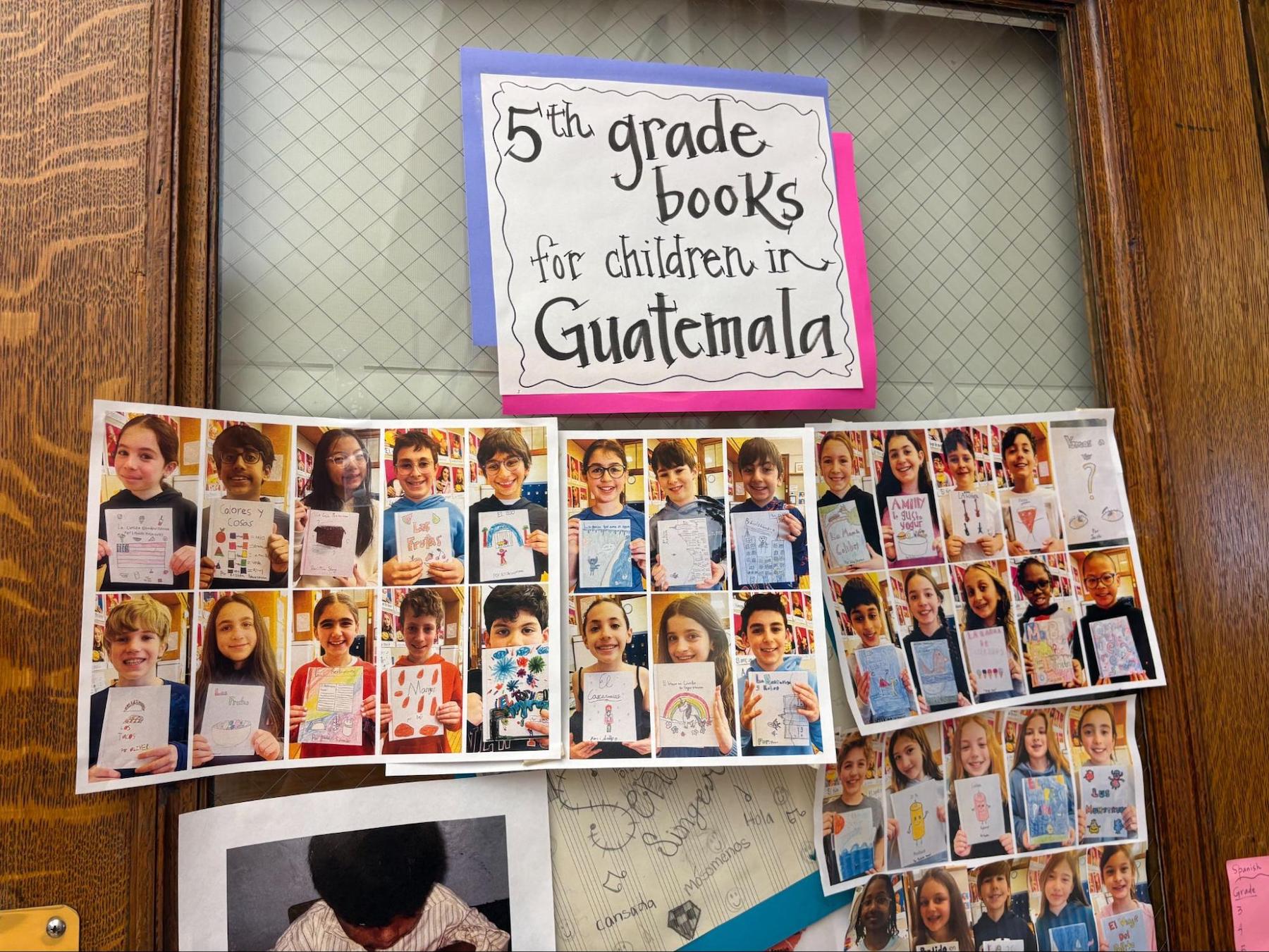
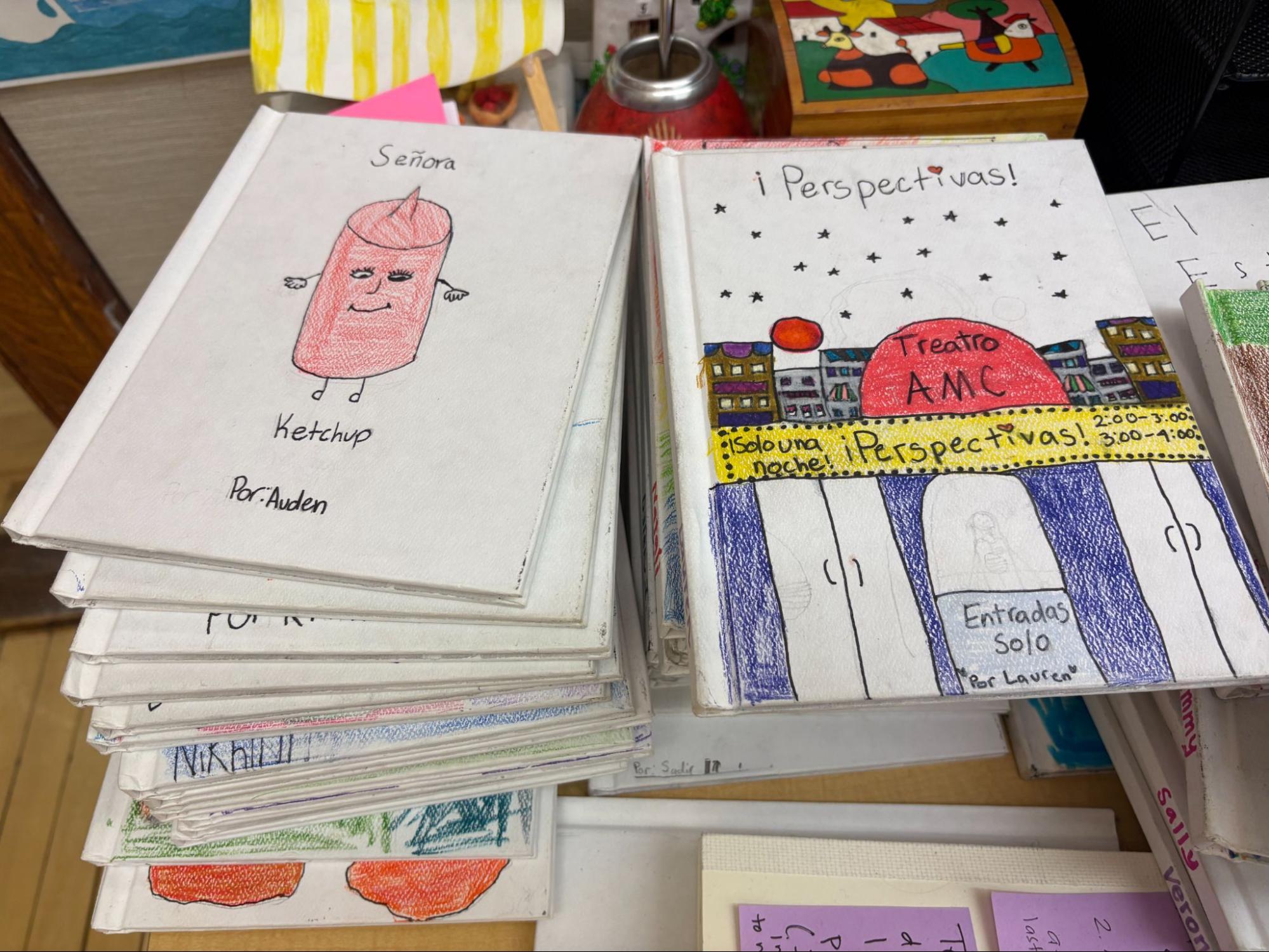
Not surprisingly, Guatemala wins the tournament. The story often inspires students to incorporate aspects of Guatemalan culture into their stories, while others focus on universal themes such as friendship. When the scope of students’ ideas extends beyond their knowledge of the Spanish language, Singer’s classroom prepares them to seek solutions in their translations.
“I don’t let them use Google Translate, so they have to use dictionaries,” she says. Singer keeps a set of rare dictionaries from Spain in her classroom for this purpose. “I urge them to write at their own level, and most of them do. Students use the dictionaries to find the new vocabulary they need. When there are students who are determined to write more than that or write in a fuller way, I often help them figure out how to say it.”
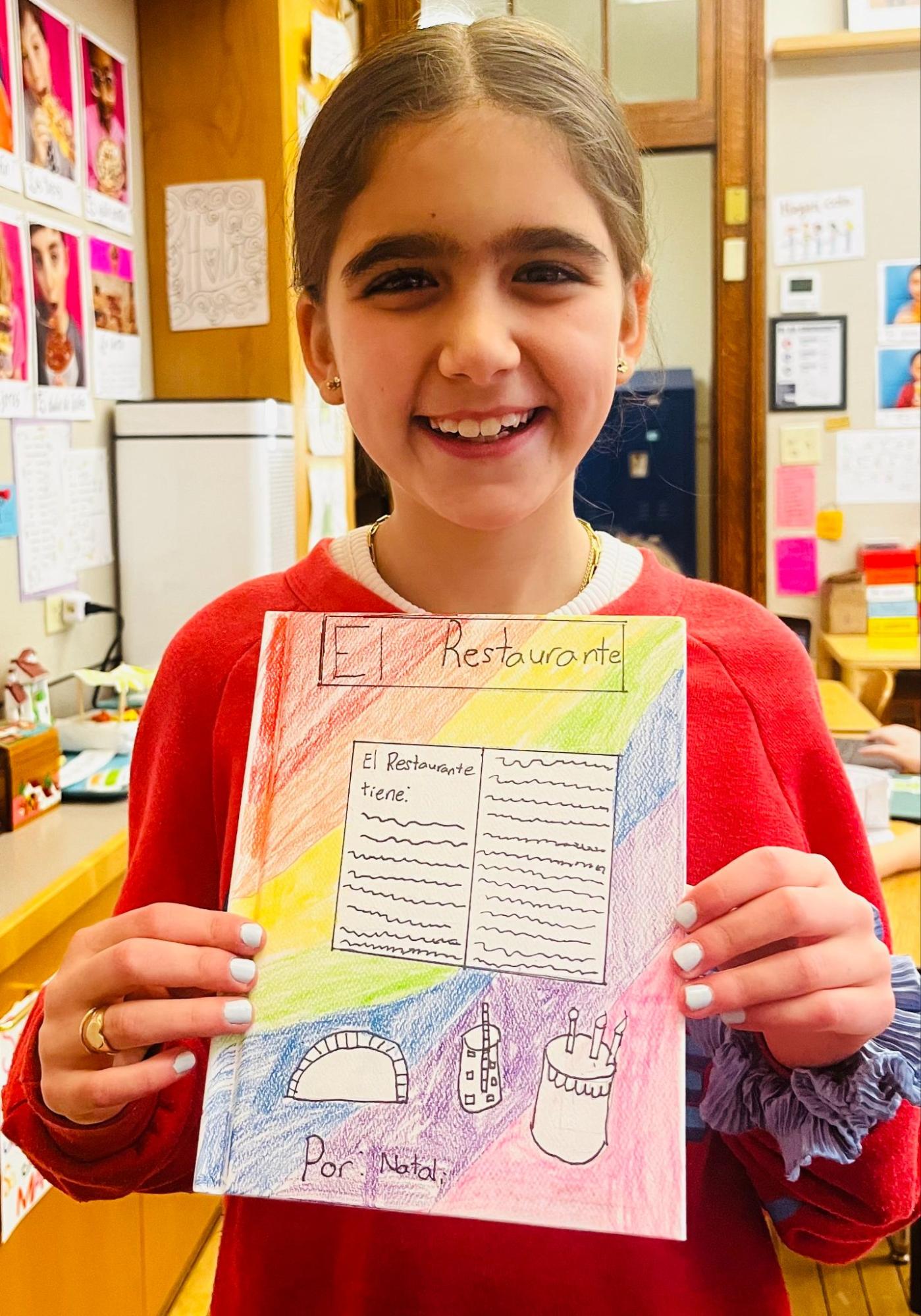
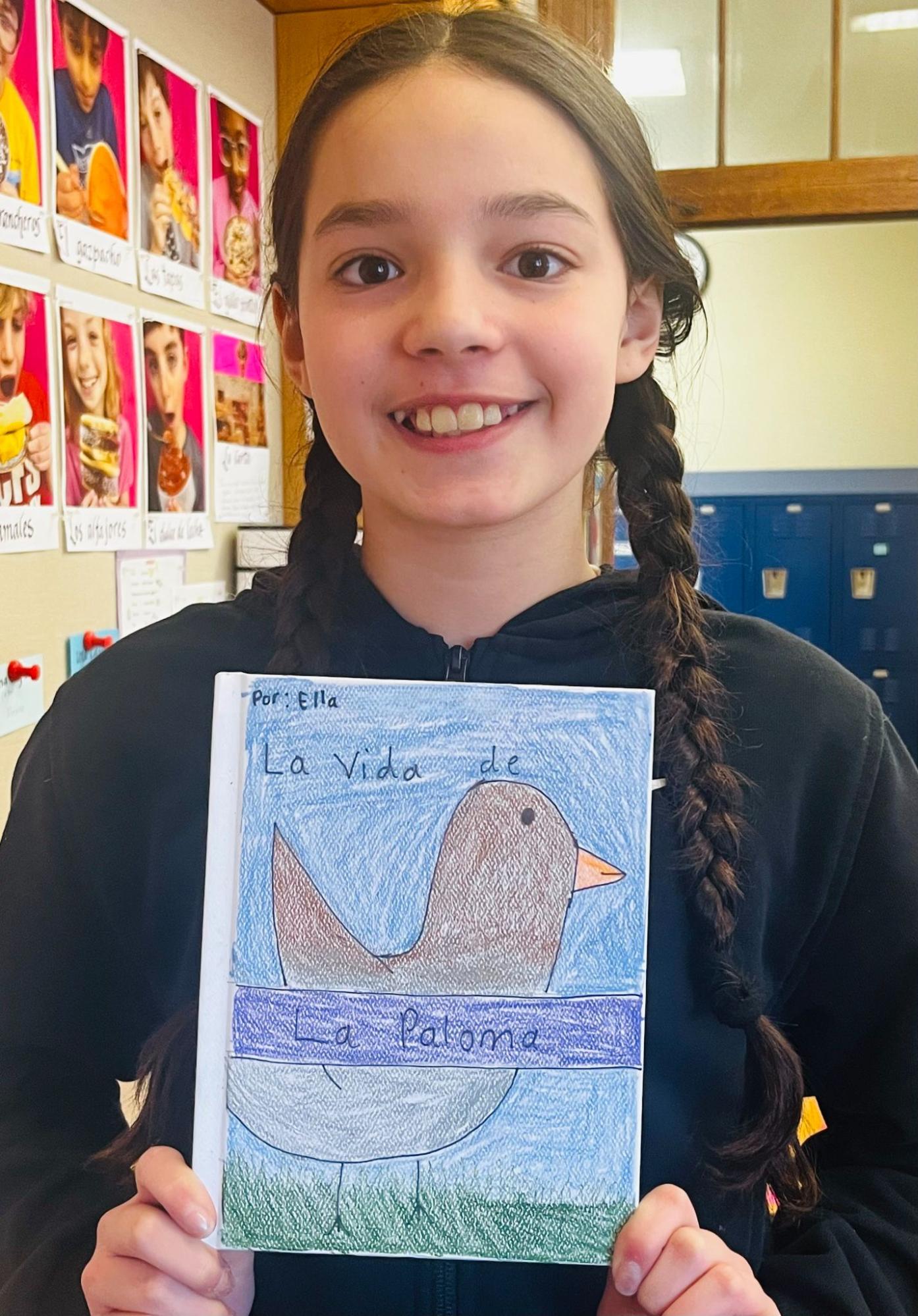
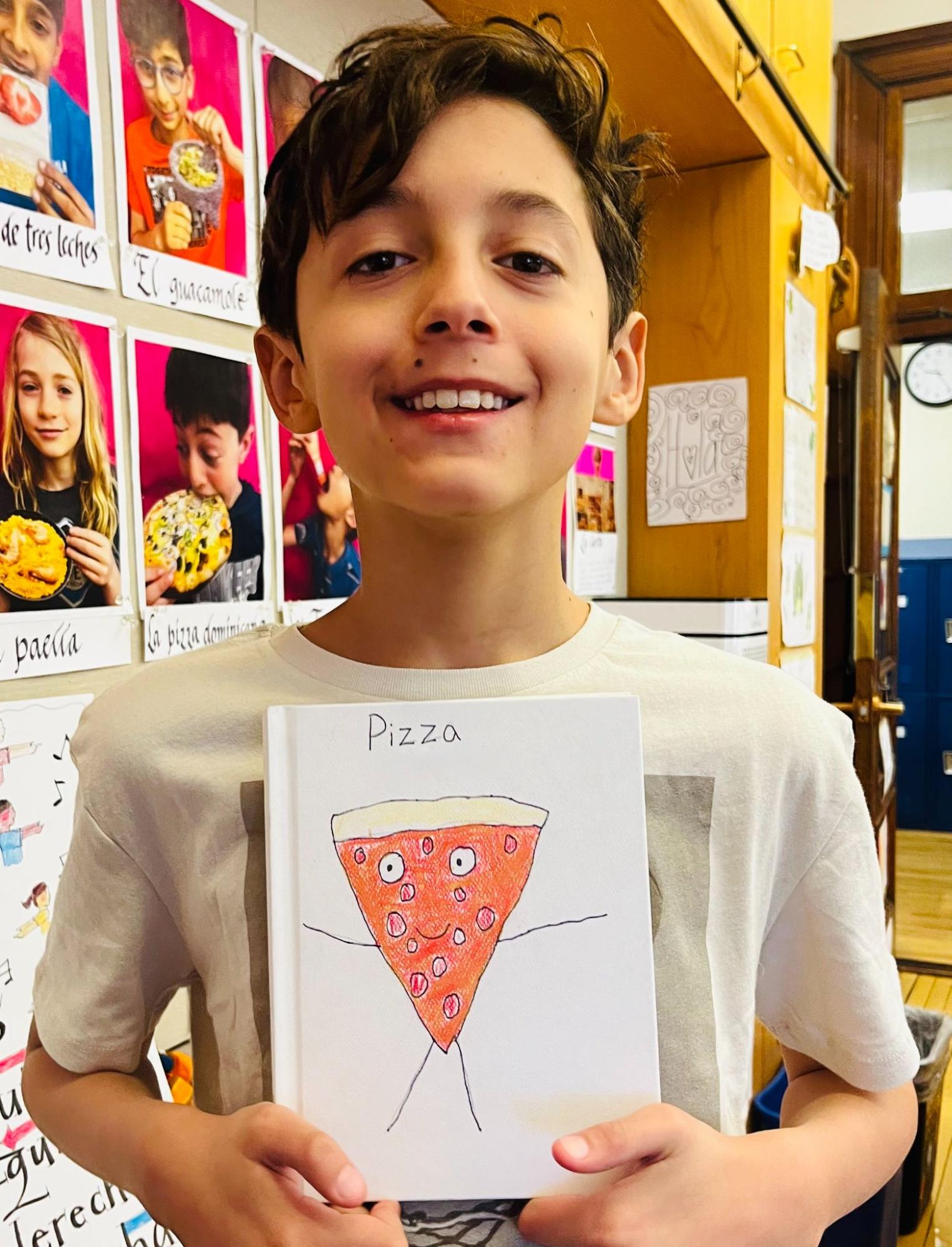
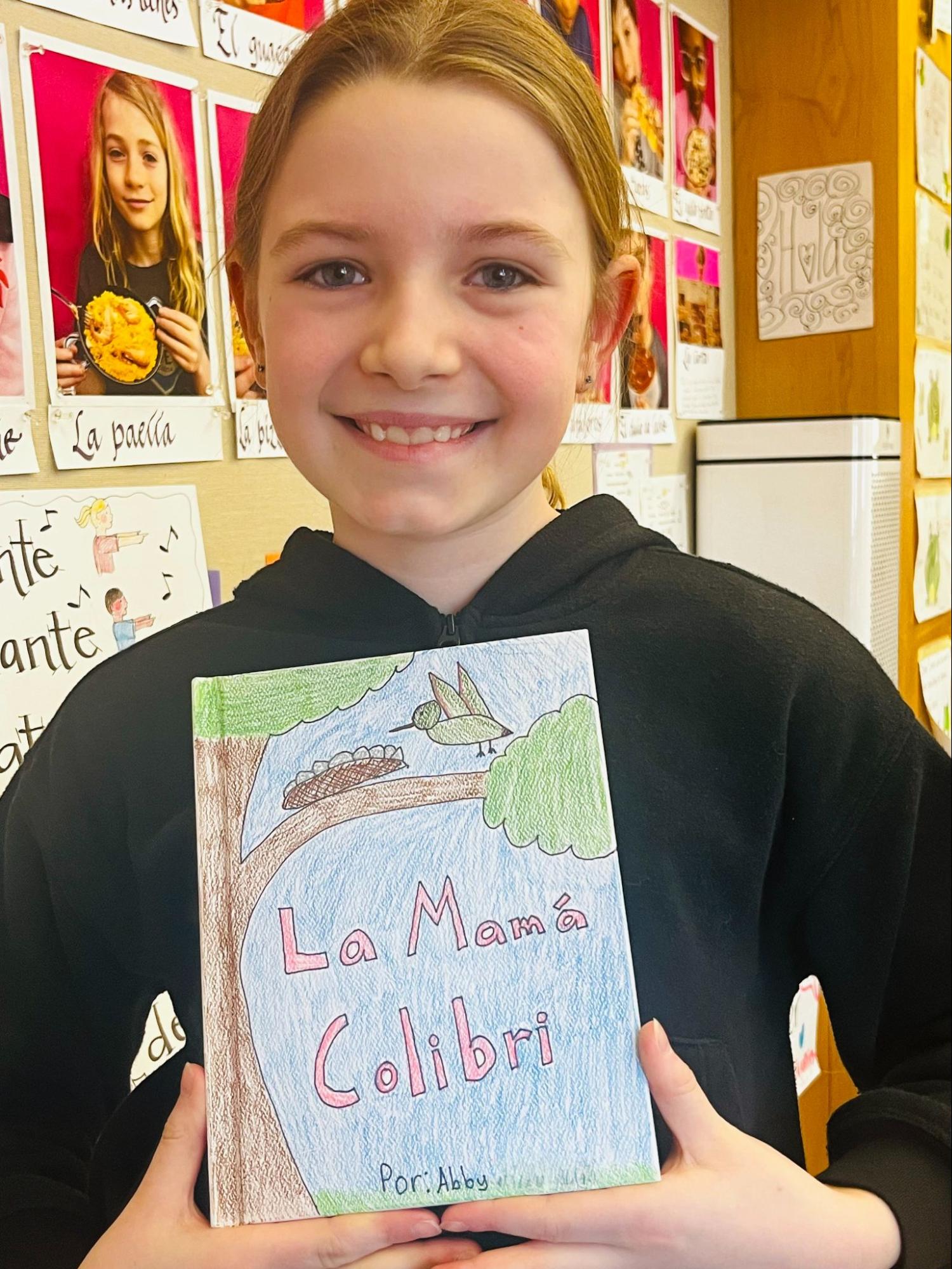
While building Spanish comprehension is key, recognizing the impact of a good deed is also important, and this stays with students beyond 5th Grade. Singer recalls a Fieldston Middle assignment in which 6th Graders were asked to reflect on a significant service project. One Ethical Culture graduate chose to write about the Spanish book project.
“She understood that there were people who had less than she did, how grateful she was for her education, and how wonderful it was to give something to somebody who didn’t have what she had,” Singer says. Moments like these, along with the letters from volunteers and partner organizations, help students understand the significance of their work.
“They understood what they were doing, why they were doing it, where it was going, and how this is an act of giving. I think it expands their understanding of the world and what it is to want to give this to somebody else.”
More than two decades after the project began, Singer continues to add new student-created books to her archive while sending others out into the world. For the children who receive them, the books offer stories, imagination, and a treasured gift of their own. For Ethical Culture students, the experience becomes a reminder that language can build connections and that even a small act of creativity can have a lasting impact.