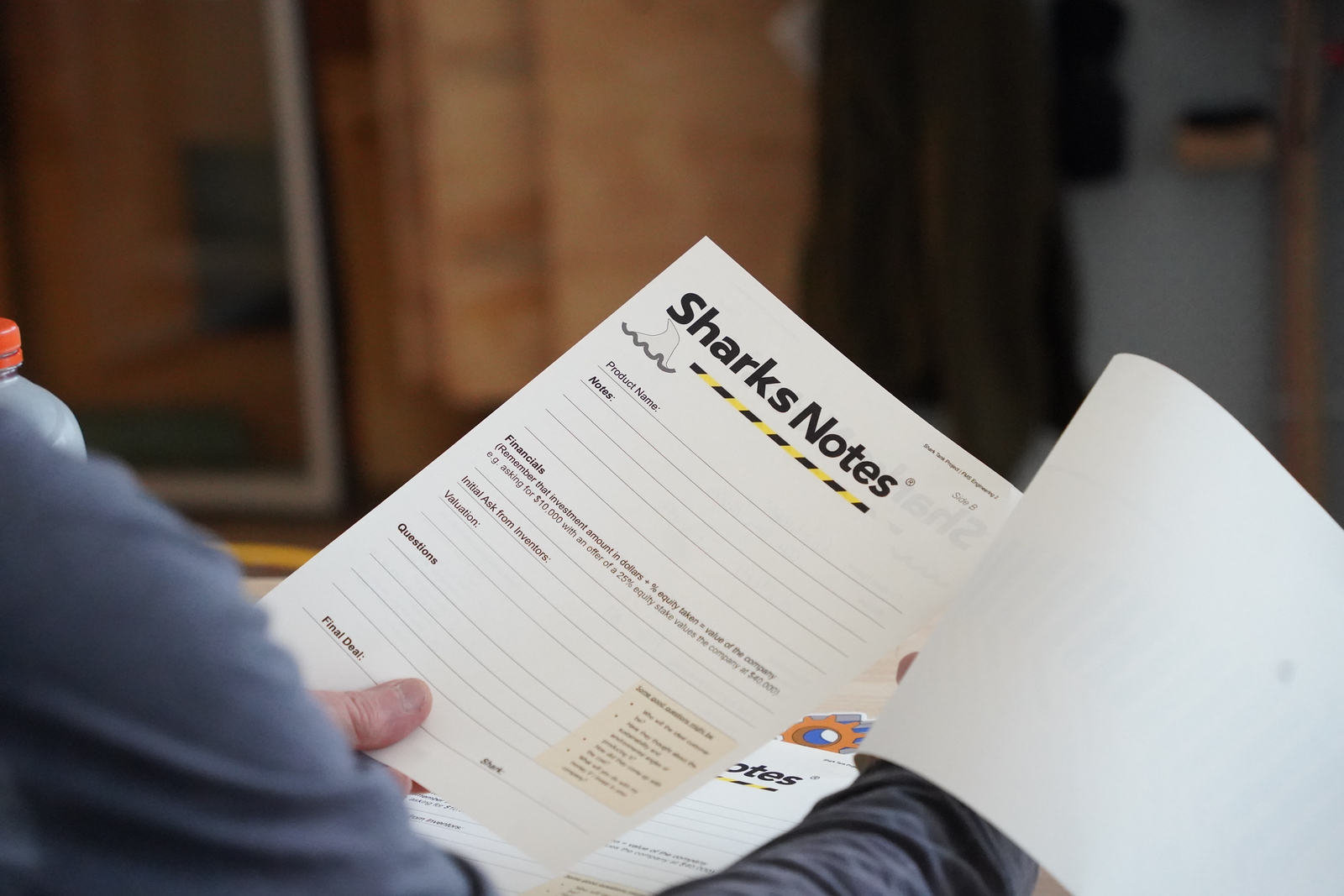
Students design, adapt, and defend their thinking.
The questions begin almost immediately. What makes this different from other products on the market? How much would it cost to manufacture? Who would actually buy it?
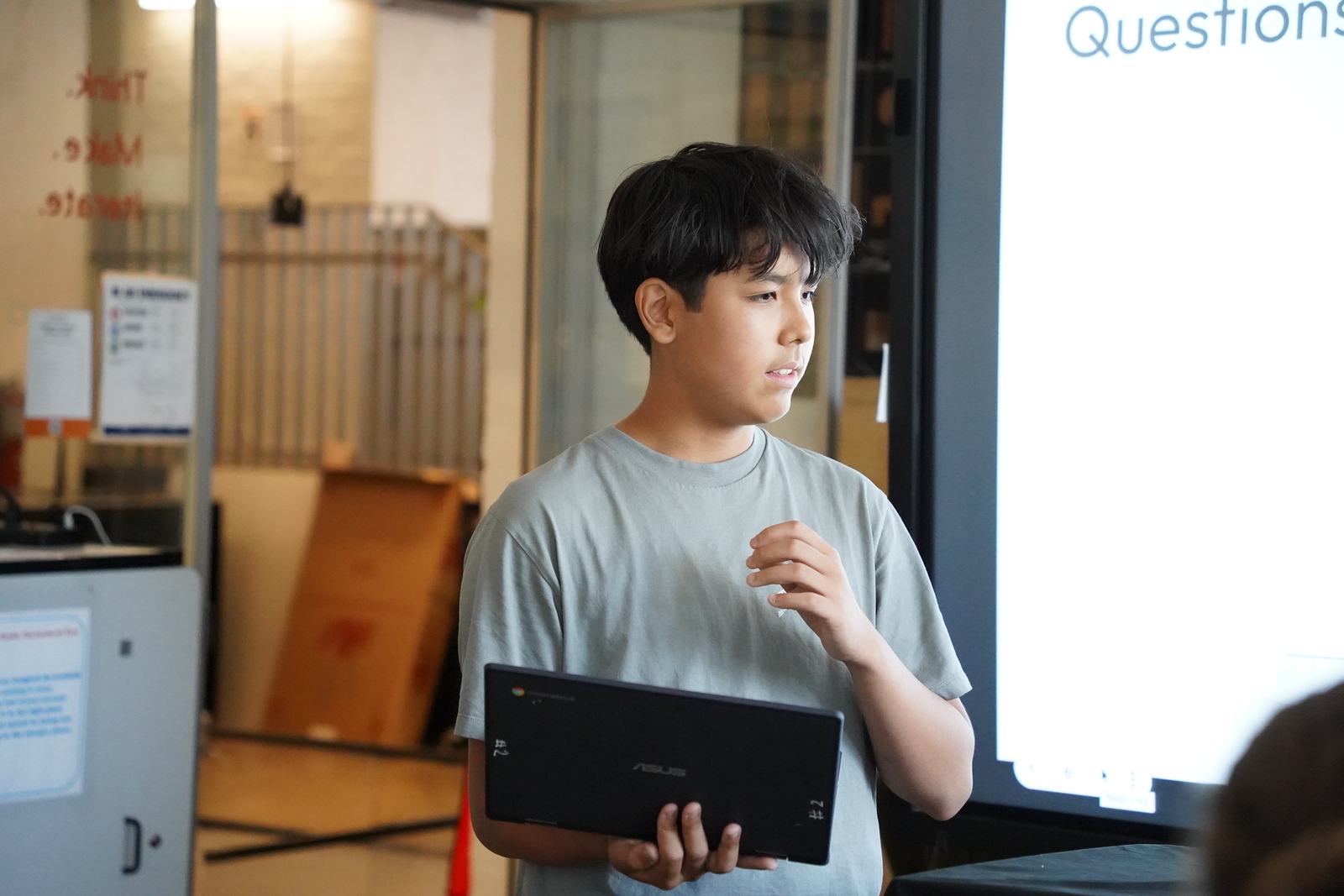
At the front of the room, an 8th Grader stands beside a prototype made of cardboard, paint, and 3D-printed parts. The student gestures toward a slide deck and then reaches for the model itself, pointing out a feature they hope will convince the panel to invest. The annual Shark Tank Engineering project asks ECFS’s 8th Graders to do something difficult in a very short amount of time: identify a real-world problem, design a product to solve it, and pitch the idea to a panel of “sharks.”
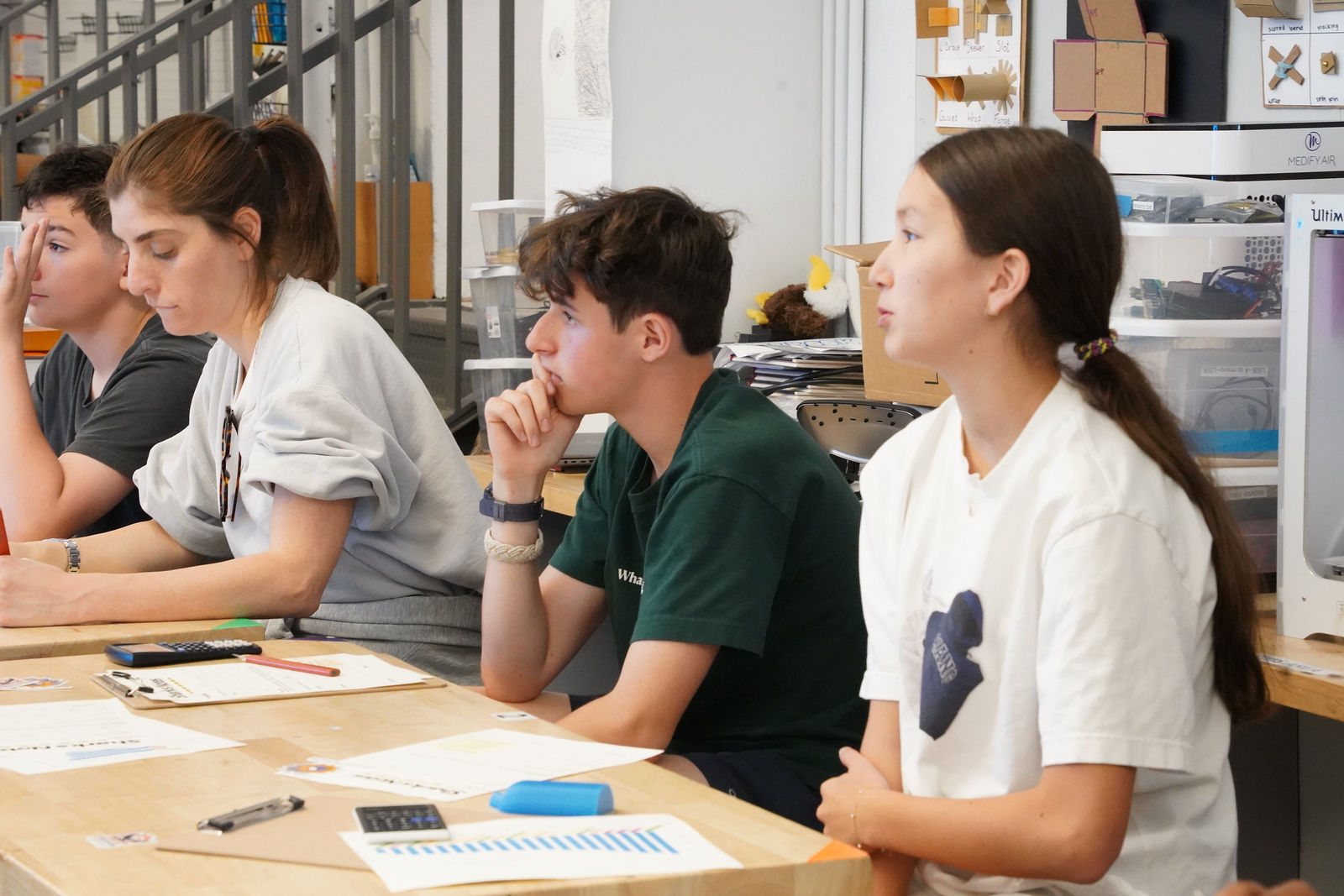
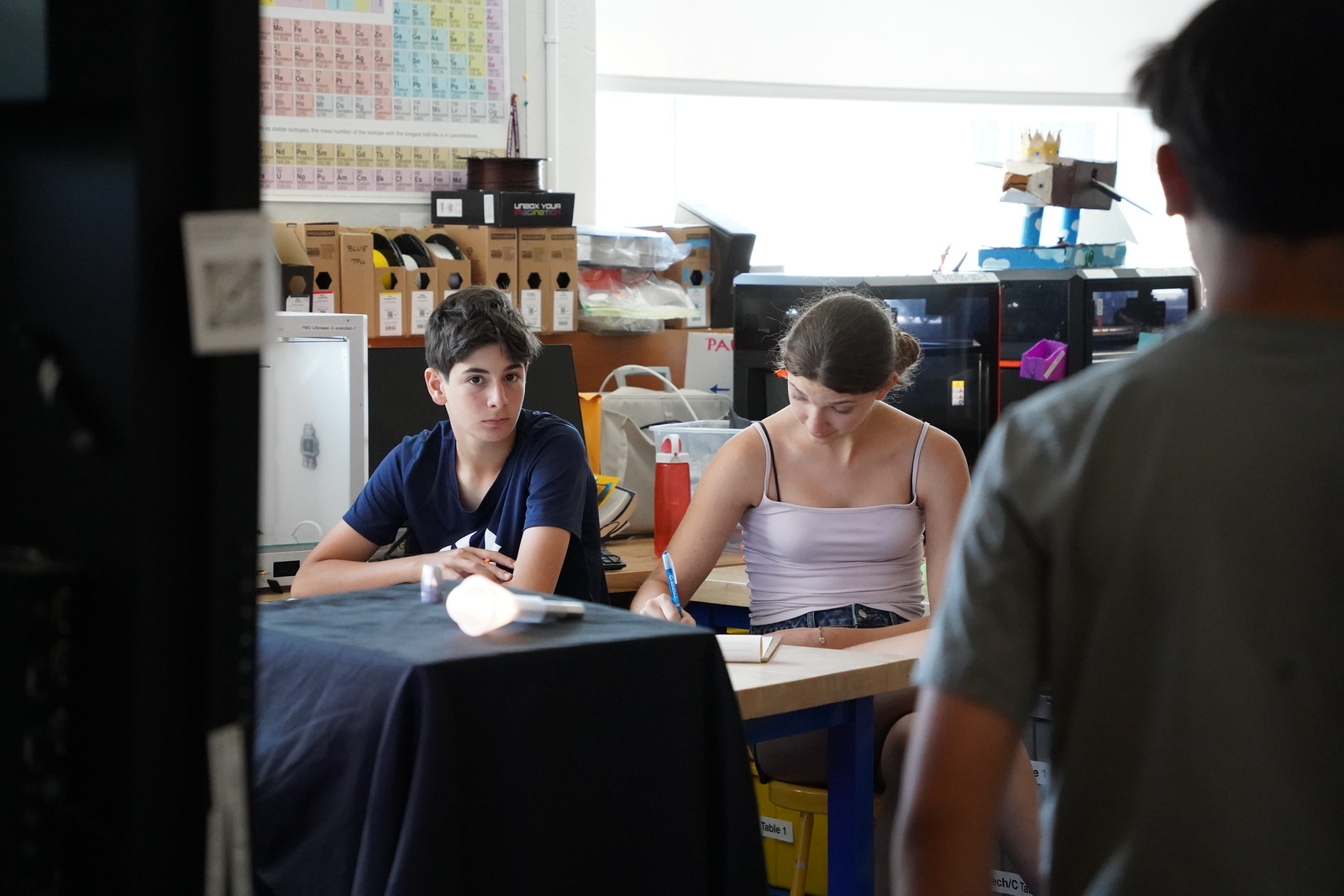
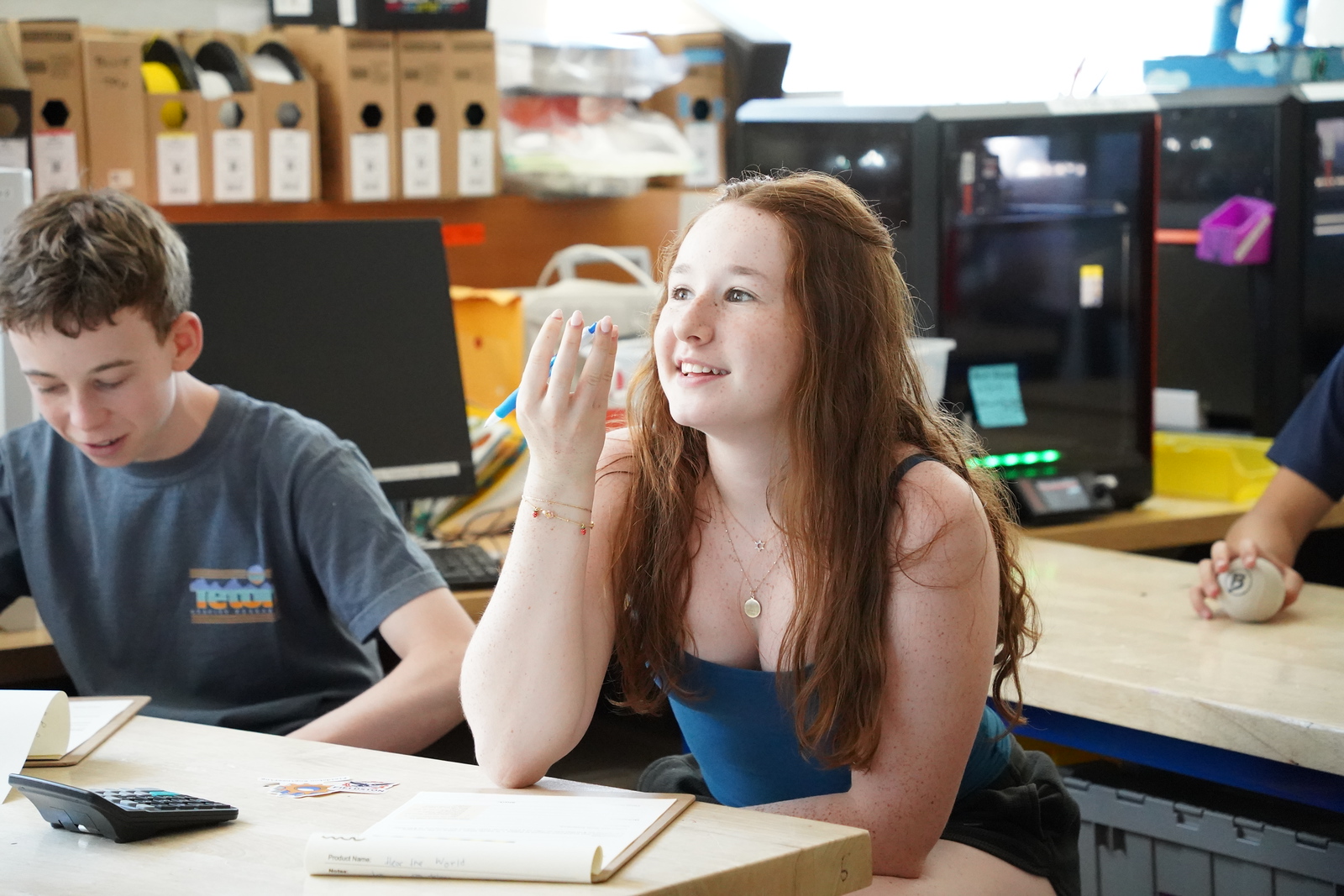
Working either individually or in teams of their choosing, students move from brainstorming to prototyping to public presentation in just a few weeks. The assignment blends engineering, entrepreneurship, research, and storytelling, but the real challenge is learning to think abstractly about uncertainty.
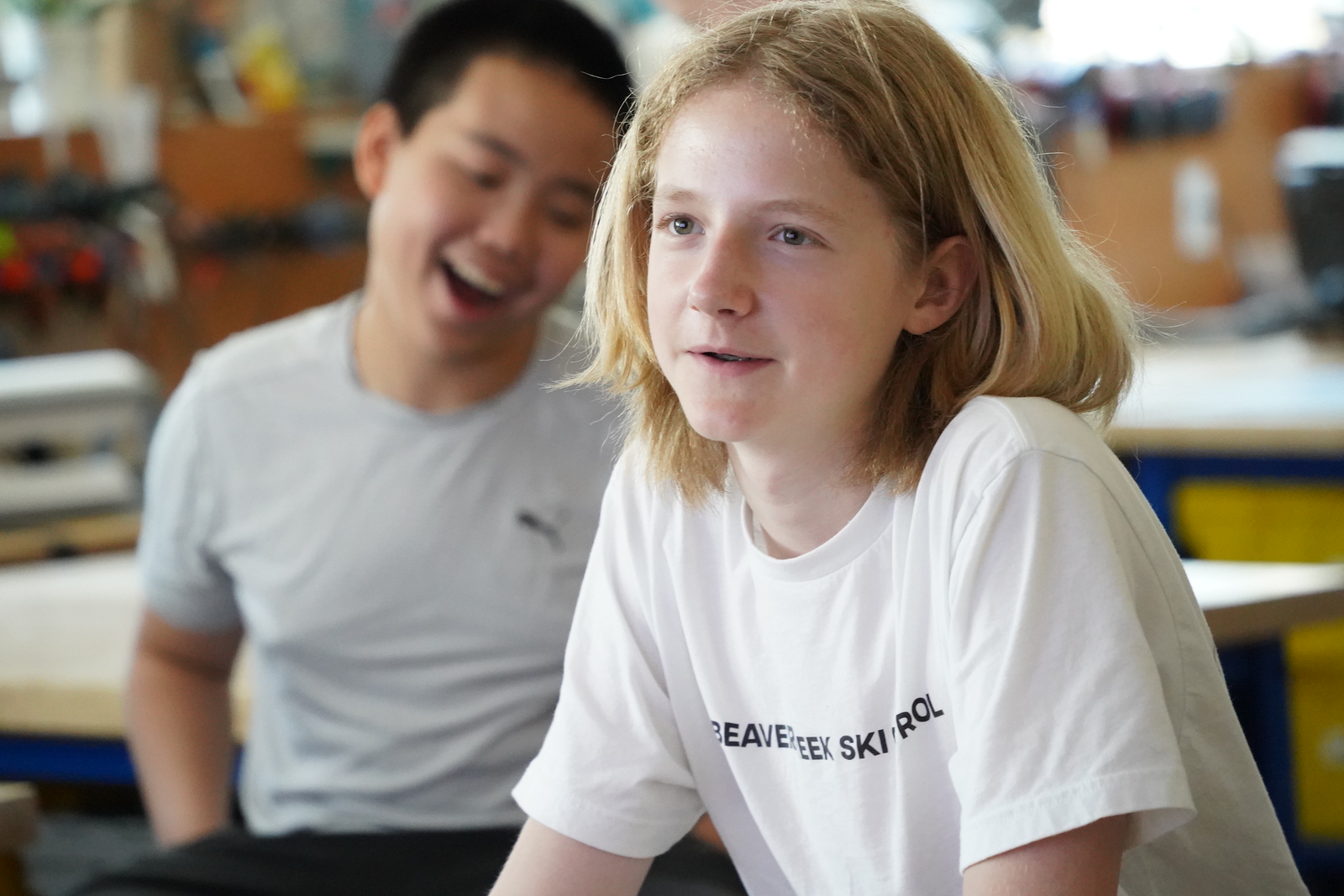
Two weeks before the presentations, the Design Center looked more like a startup incubator than a classroom. Some students rehearsed pitches while others tested prototypes or painted business logos onto freshly printed 3D models. One group debated pricing structures. Another tried to predict the toughest questions the sharks might ask.
Everywhere, conversations overlapped.
The team behind “Fast Find”, a smart grocery card designed to track grocery lists, budgets, and store navigation, bounced between app design, prototype construction, and pitch preparation all at once. Nearby, another group worked on “Tmpt,” pronounced “tempt,” a smart oven chip designed to predict precise cook times by analyzing the quirks of individual ovens.
Across the room, the creators of the “Prank Alarm Clock” tested ideas for an alarm designed to physically move around the room, forcing users out of bed to turn it off.
The ideas were undoubtedly inventive, but what stood out most was how seriously students approached the process behind them.
At any given moment of this project, groups were working at completely different stages. That flexibility is intentional. Engineering Teacher John Baglio makes a point of not walking students through a step-by-step formula, as that would simply not replicate the real-world process of tinkering and invention. Instead, students are expected to shape both the product and the process themselves.
Teachers serving as the “sharks” circulated throughout the room, asking questions rather than supplying answers outright. What problem is the product really solving? What happens if the technology fails?
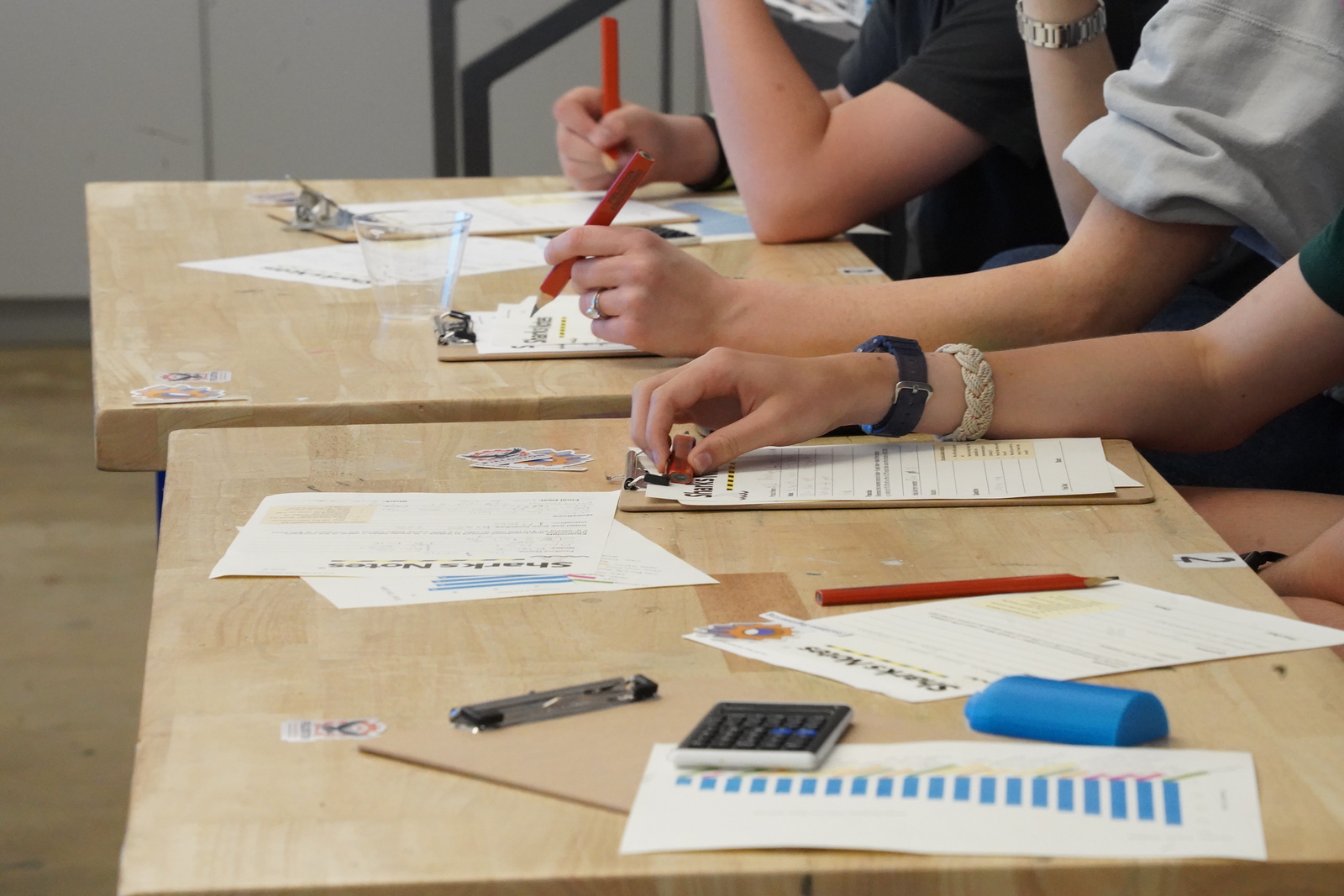
To help students think like entrepreneurs, Baglio also asked the broader school community to weigh in on each idea before presentations. “It is helpful for our inventors to be able to tell the sharks about how well their product has been selling,” he explained. “Because we don’t have actual sales numbers, we use this survey to determine how interested people are in the products they have designed.”
The survey results served as a stand-in for market research, providing students with data to estimate demand, refine their pitches, and defend their ideas when the sharks begin asking questions.
By presentation day, those questions arrived quickly.
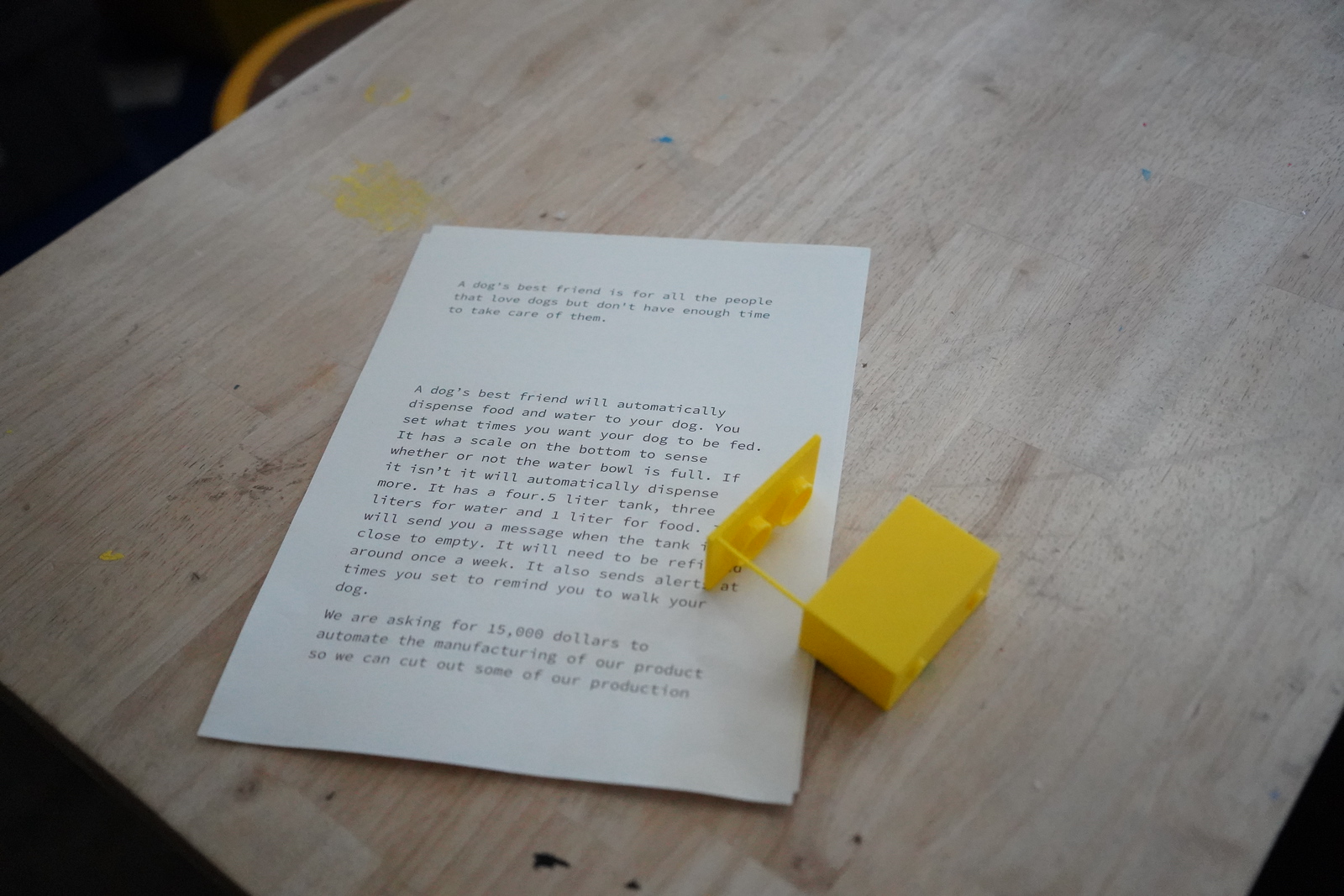
One student pitched “Dog’s Best Friend,” a smart dog feeder that dispenses food and water, tracks pet health information, and connects owners with veterinarians through a website and companion app. Seeking $30,000 for a 10% stake in the company, the student fielded questions about production costs, manufacturing, and profit margins before ultimately accepting a deal worth $100,000 for 20% of the company, split between two sharks. The inventor pointed to future automation as a way to reduce manufacturing costs as the company scaled.
Another student pitched the “Node Lantern,” a lightweight camping accessory that attaches to a standard flashlight to amplify its light without adding bulk to a hiker’s pack. Costing less than $1.50 to produce and projected to retail for $9.99, the student pitched an ambitious future that included outdoor brand partnerships, international expansion into alpine regions, and even providing lighting for a future Winter Olympics.
But when a parent and engineer serving as a shark asked whether the product would fit every flashlight size, the conversation shifted from big-picture growth to practical design considerations. The exchange captured the spirit of Shark Tank itself. Bold ideas matter, but so does attention to detail.
Whether negotiating with investors, defending a profit margin, or rethinking a design after tough feedback, 8th Graders spent the project engaging with challenges that have no single correct answer. That kind of authentic, real-world learning sits at the heart of ECFS’s progressive philosophy. Shark Tank asks students to apply knowledge in addition to acquiring it, building the confidence and adaptability that will serve them far beyond the classroom.